Vizio Laptop Support

  • Subscribe to our RSS feed.
  • Twitter
  • StumbleUpon
  • Reddit
  • Facebook
  • Digg

Sunday, 19 May 2013

EARN AIRTIME ON-NET

Posted on 01:30 by Unknown
IT IS REAL!!!!

TODAY IS THE LAST DAY,so I repeat;
YOU HAVE TWO OPTIONS;

you can either join http://mcent.com/ref/70C24Y/
and start earning airtime for using social sites online or you can juSt sit there and complain about how this is a SCAM. http://mcent.com/ref/70C24Y/

...you dont loose anything by try it out; just register your mobile number starting with your country code then confirm your registration and start earning!!!!THE CHOICE IS YOURS... http://mcent.com/ref/70C24Y/
mcent is HERE TO STAY!!!!
Read More
Posted in | No comments

Sunday, 12 May 2013

Google Chromebook Pixel Review

Posted on 03:14 by Unknown
                                          google chromebook pixel side angle             

Surprises are not Google’s forte. The company which re-defined the word “beta” often offers services well in advance of their “official” release, and though hardware can’t follow this trend by its nature, the press is rarely blind-sided by a product. And then, out of nowhere, came the Pixel.
Until now, Google has been happy to promote hardware through cut-rate pricing. The entire Nexus line leans strongly on value to sell units. Pixel, however, doesn’t rely on that excuse. It puts a banner in the ground and shouts “Google can do quality, too. Just you watch!”
So, can Google do quality? The answer looks positive on paper. All of the expected specifications are here: Core i5 processor, Intel integrated graphics, 4GB of RAM, solid-state drive – but the display is the start of the show. The Pixel comes equipped with a 2560 x 1700 panel, the highest-resolution display on any laptop today (Retina is 2560 x 1600). This excellent equipment helps justify the Pixel’s starting price of $1,299, but is Chrome OS ready to support a premium laptop?

Runway competition

The Pixel looks like a modern incarnation of a laptop built in 2006. The boxy and flat display lid, featureless interior, and full-width hinge are elements reminiscent of older PCs instead of today’s latest and greatest. All of this cumulates in a design that works, but has a whiff of engineering prototype.
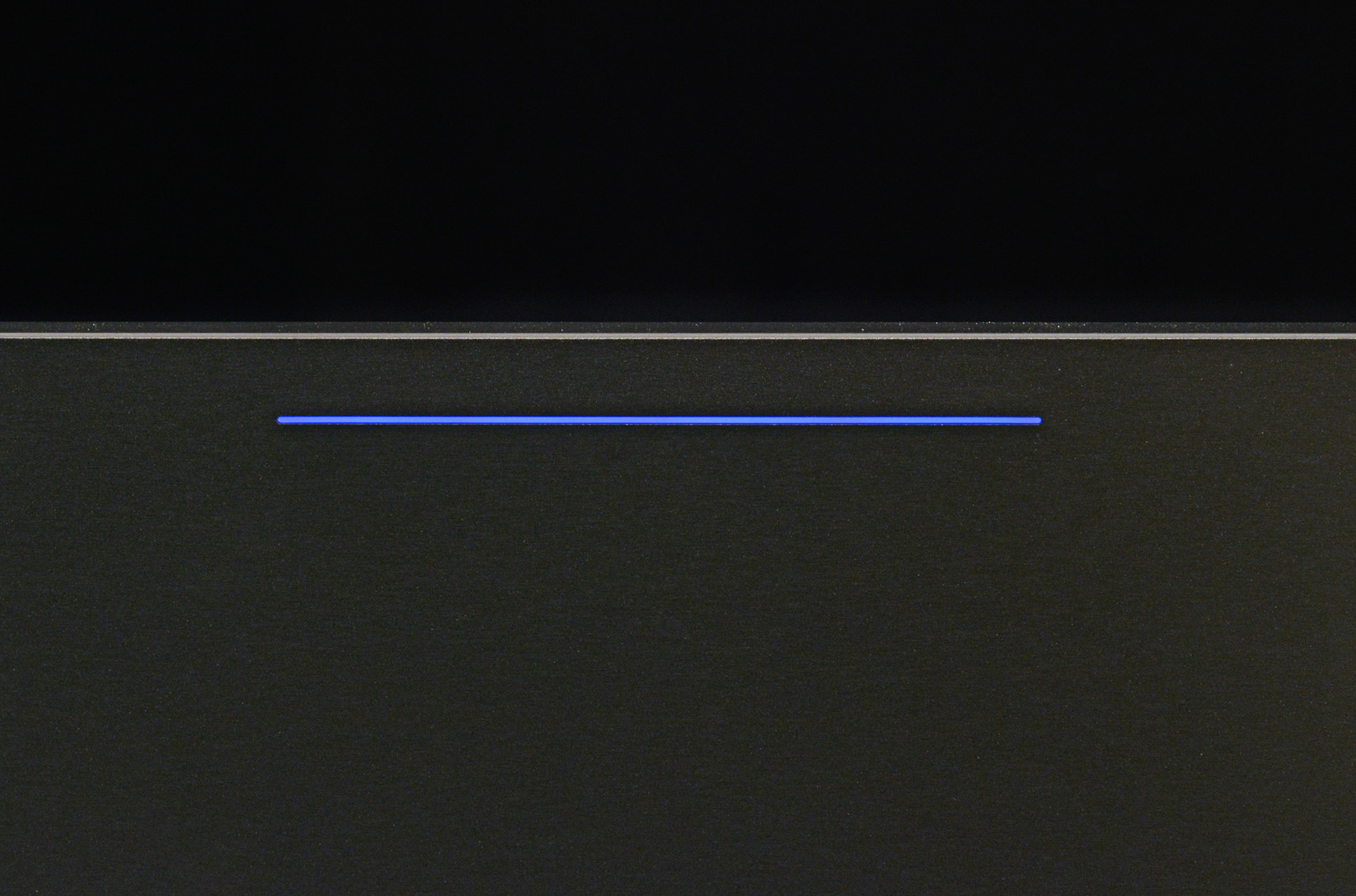
google chromebook pixel led strip
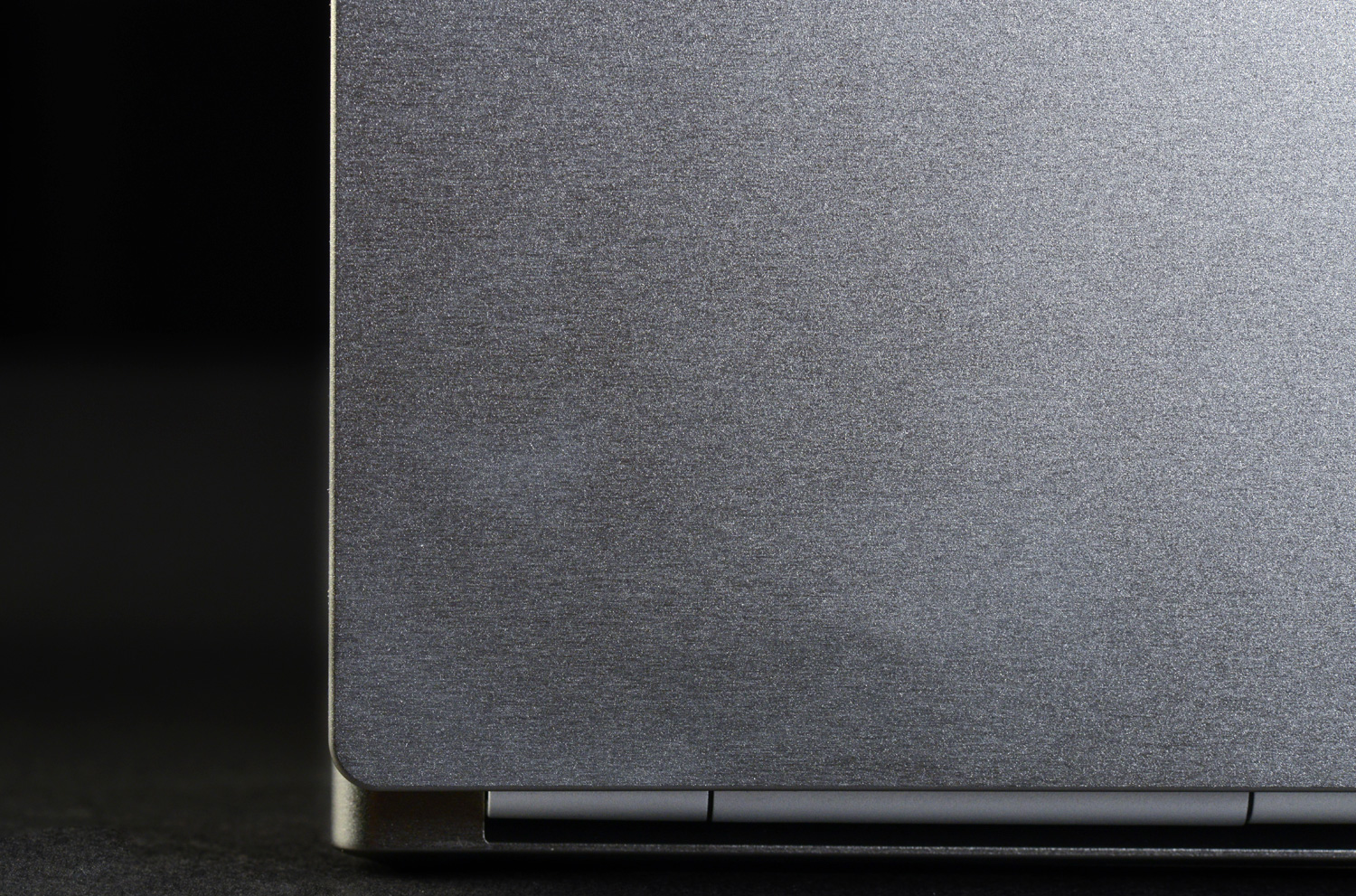
google chromebook pixel hinges

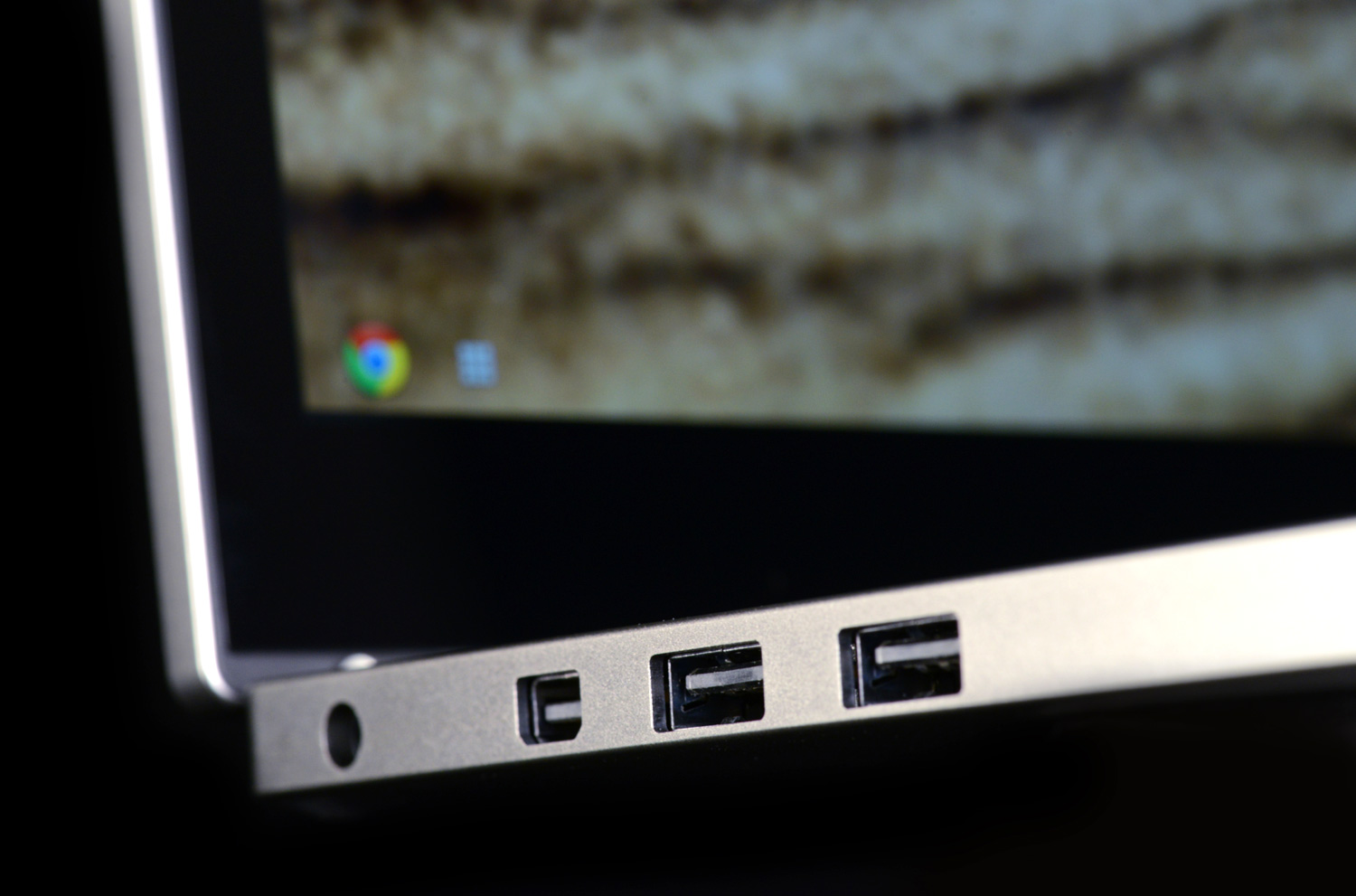
google chromebook pixel ports
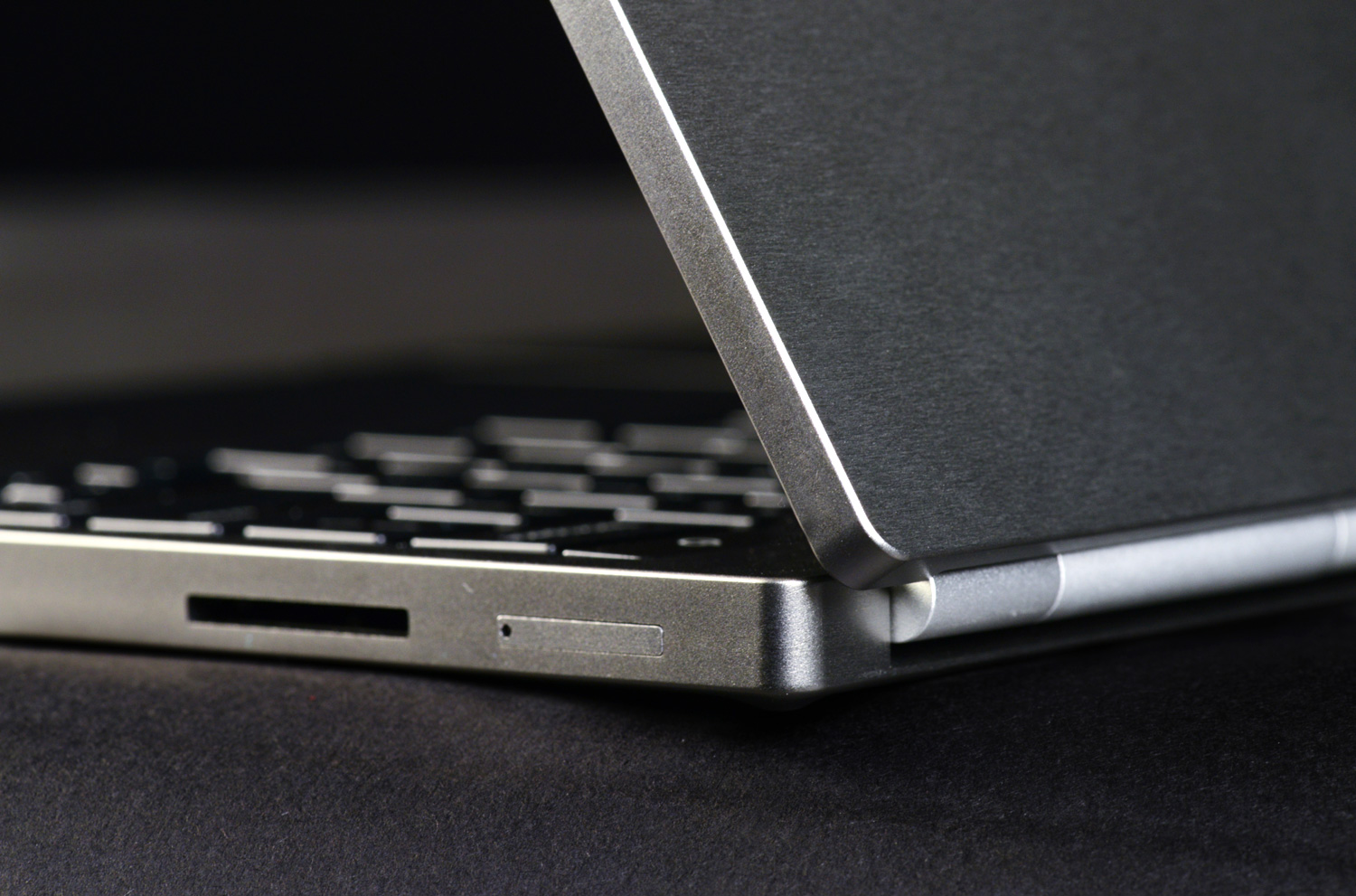
google chromebook pixel hinges


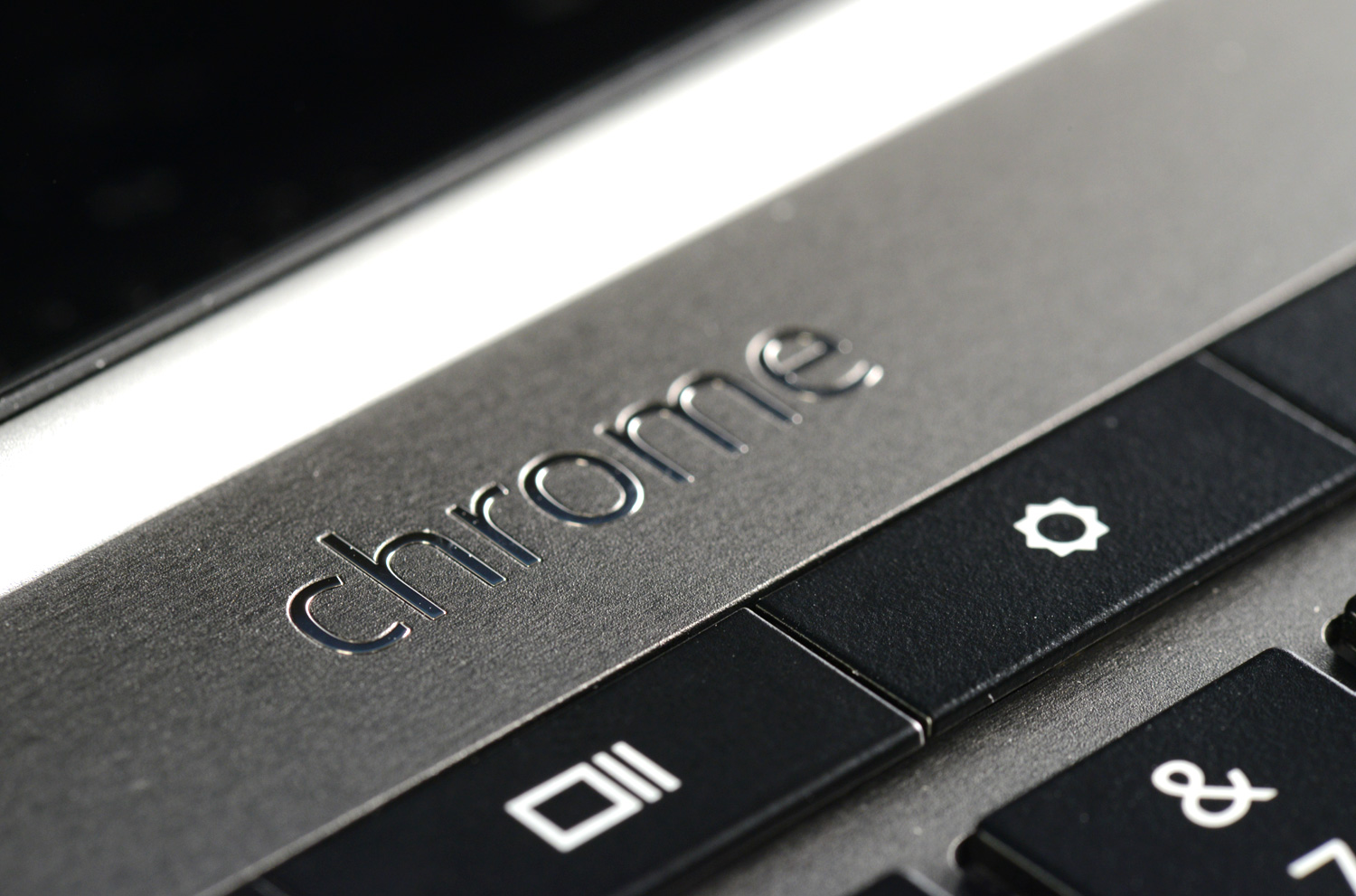
The lack of obvious branding and featureless surfaces may be a boon to some, but they keep the system from looking as expensive as it should. Which is a shame, because build quality is excellent. Every surface feels sturdy from every angle. There’s no bending, no flexing, and no creaking of materials. A MacBook may look better, yes, but the Pixel is neck-and-neck when it comes to feel.
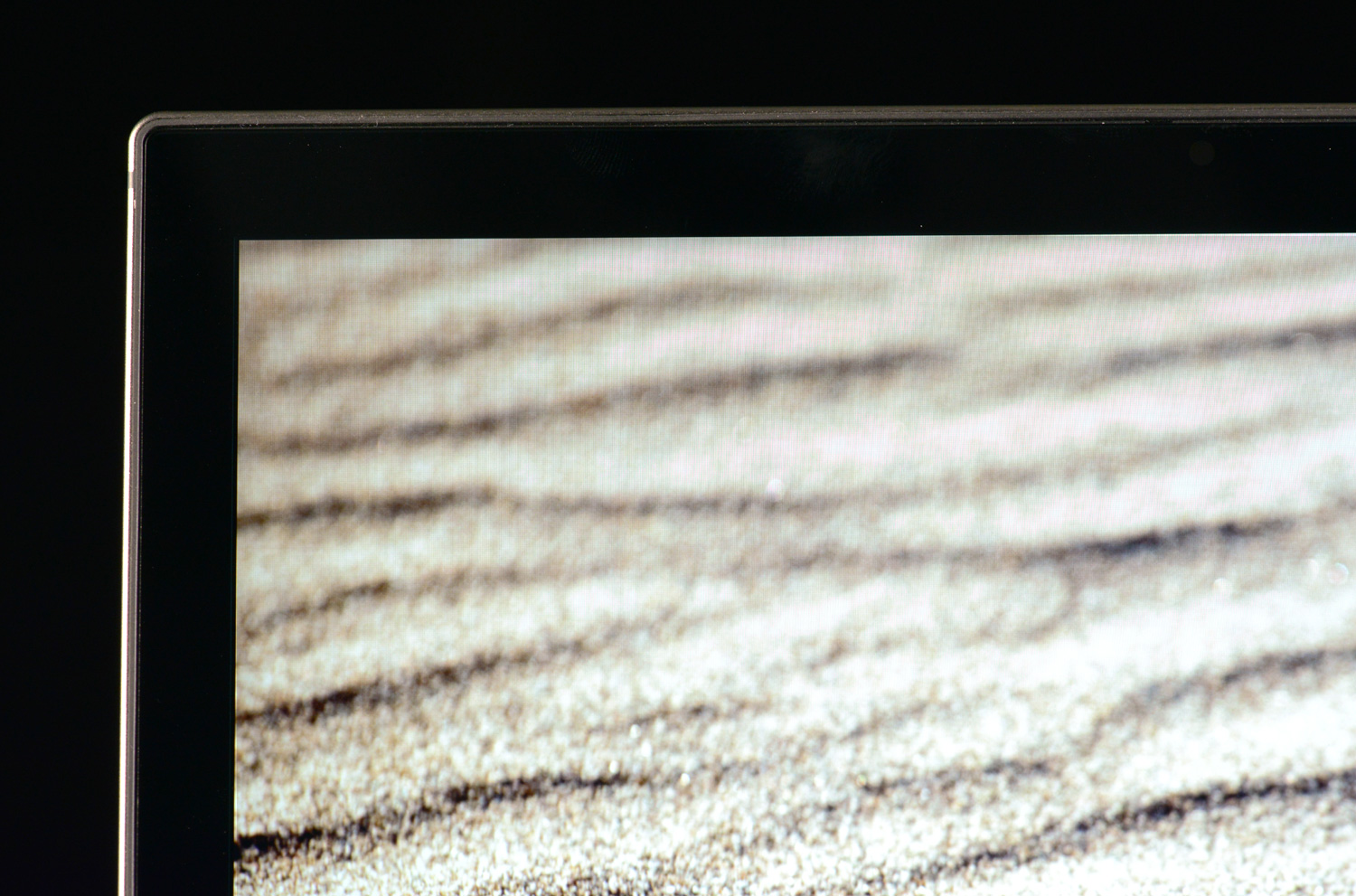
There are some small touches worth noting as well. An LED strip on the lid acts as the laptop’s defining aesthetic feature and, while usually lit blue, it fades to Google’s rainbow of colors when the lid is closed. Also, as we recently found out, this LED strip also blinks frantically when the user enters the Konami Code. We also appreciate the lack of material surrounding the display, which rival’s Dell’s XPS 13 for barely-there bezels.
Connectivity is a sore point, however. While the ports are in convenient locations, the Pixel only serves up two USB 2.0, mini-DisplayPort, and a 2-in-1 card reader. The lack of USB 3.0 is a disappointment. Moving files to and from an external drive will always be tedious on the Pixel. Google may think this doesn’t matter (the cloud, and stuff, you know?), but come on. This is 2013 – not 2023. Not everyone has converted to the cloud concept.

Interface issues

One of the Pixel’s headline features is the inclusion of touch input. This is the highest-resolution touch display on the market (even all-in-one desktop PCs are behind), so that’s great, right? Well … no.
Touch is present, and it works, but that’s where the good news ends. Navigation is laggy and choppy. Our movements were sometimes met with a split-second of nothing before the Pixel sprung to life, and fast scrolling often moved in jerks and starts.
google chromebook pixel keyboard touchpad
google chromebook pixel keyboard


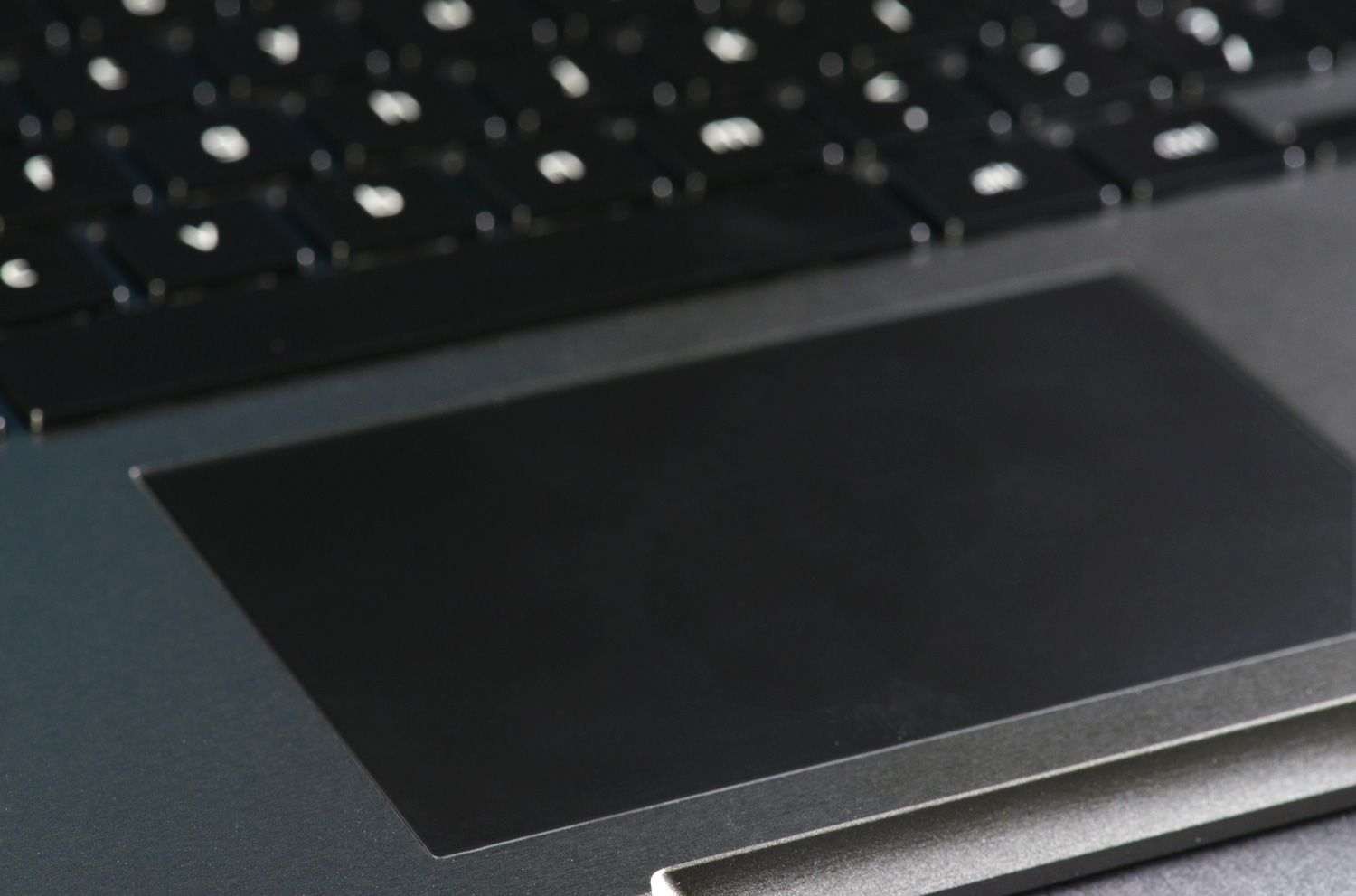
We know that input, not performance, is the problem. How? The touchpad isn’t plagued by these issues. As with the less expensive Chromebooks on the market, the touchpad on the Pixel is among the best. Our input was met with instant response and scrolling proved butter smooth. The laggy touchscreen isn’t a sensitivity issue, either; the touchpad scrolls through a page more quickly than the touchscreen when both are at their default settings.
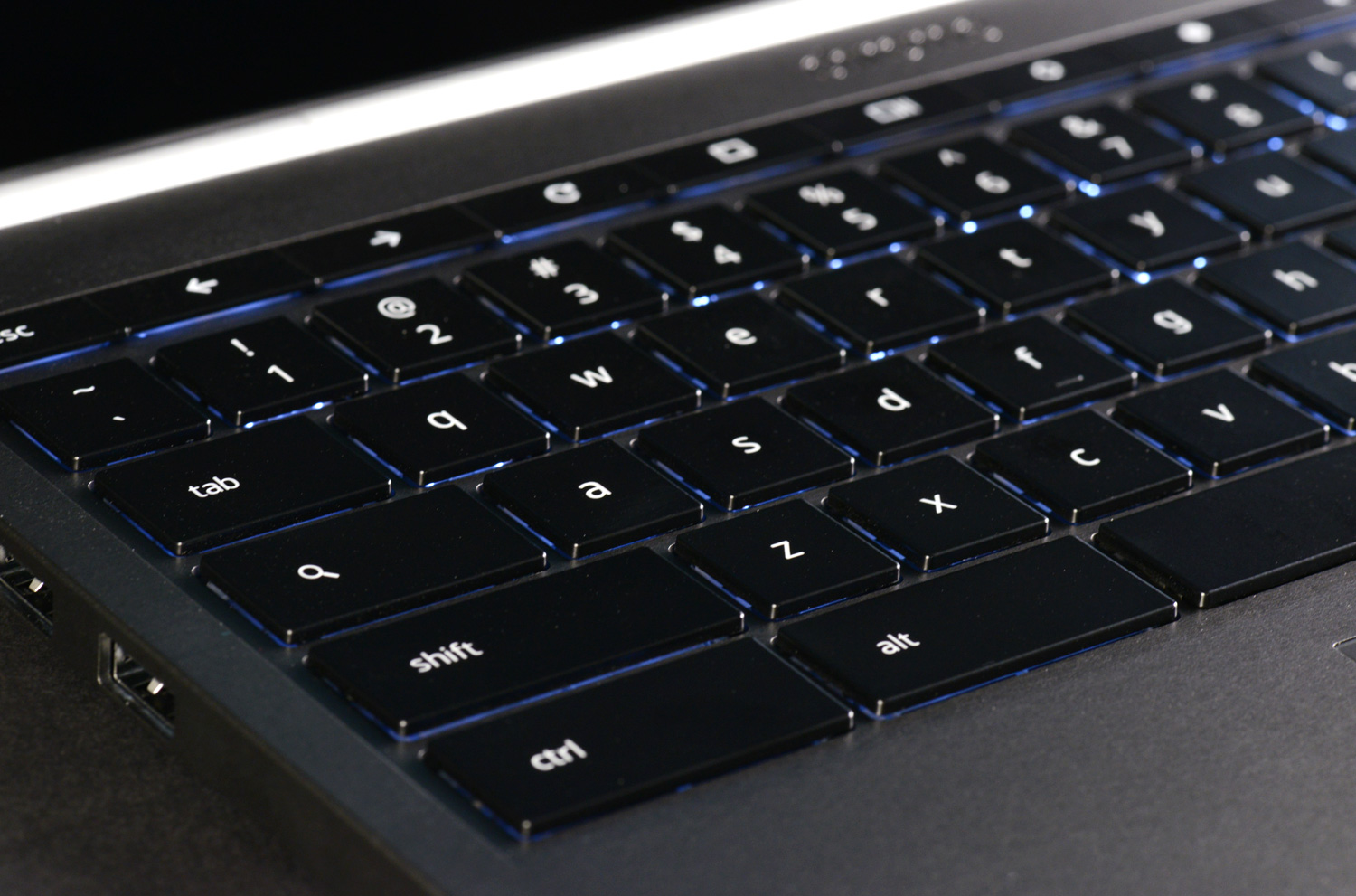
As for the keyboard, we came away unimpressed. Space is ample in spite of the laptop’s small frame, and key caps are large, so typing is pleasant at first. However, the keys lack travel and feel vague when they bottom out. These traits make the experience less precise than it could be.
That’s not to say the keyboard is bad. We think it average. But consumers spending over $1,000 on a laptop will be expecting more.

Display: The killer feature

The incredible 2560 x 1700 display will draw anyone looking to buy a Pixel in its direction. There’s no doubt that this panel is among the best sold today. We found it bright, colorful, and incredibly sharp.
There are also other, more subtle advantages. Scaling is one. Both Windows and Macs have to deal with legacy apps coded with much lower display resolutions in mind. If they’re not scaled, they may be unusable; but scaling often introduces a blurry look. Chrome OS avoids this problem because everything can be scaled within the browser. The result is a more uniform experience that always makes maximum use of the pixel count.
google chromebook pixel display
Speaking of which, the extra 100 vertical pixels aren’t included for novelty. Google has designed the laptop with a 3:2 aspect ratio instead of the wider 16:9 found on almost every competitor. Because most Web pages are designed to scroll vertically, rather than horizontally, the Pixel can display more content than competitors.
Audio quality has been a sore spot in earlier Chromebooks – but not here. We were blown away by one of the best laptop sound systems we’ve recently heard. Maximum volume is extremely loud, some bass is reproduced, yet the mid-range remains clean and vibrant. Most users won’t need to supplement the system with external speakers.

The Chrome OS experience

Chrome OS hasn’t had any major additions since the last Chromebook we reviewed, the Acer C7 Chromebook. That’s not a complaint. Formerly just a browser in a box, the experience is now more reminiscent of a Windows machine. There are windows, a task bar, a system tray, and more.
Google has also taken steps to make sure the operating system isn’t useless offline. Users can now edit documents and emails while in offline mode (assuming the laptop has been previously synced with Gmail and Google Drive). Changes are automatically saved online when an Internet connection is re-established. Some Web apps can be installed and used offline, as well, though support for this is a bit sparse.
google chromebook pixel
These advancements are important. Chrome OS is actually better than Windows or OS X when browsing the Web and performing tasks through Web applications. It feels quicker and provides a more focused interface.
Even so, many features still aren’t offered. Parental controls, advanced power management, keyboard customization, display calibration – all of these are absent. There are many tasks this system can’t perform because the operating system lacks the required features.

Quick with some caveats

Most benchmarks won’t work on Chrome OS, which leaves us without objective scores to present. That’s not a serious issue, however, because the hardware isn’t exotic. The Core i5 processor, clocked at 1.8 GHz, is similar to that found in many Ultrabooks. Other specifications include 4GB of RAM and Intel HD 4000 integrated graphics.
All of this makes for an experience that’s quick and fluid. Web browsing isn’t difficult for a Core i5 to handle, so if that’s all you expect your Chromebook to handle, the hardware in the Pixel may actually be overkill.
There are some issues, however. Intel HD 4000 isn’t a quick graphics solution to begin with, and we felt it performed worse than it should during our tests. Even simple 3D games played in-browser were often unsatisfactory. And while the solid-state drive is quick, its base capacity of 32GB is incredibly small. Yes, most storage will be in the cloud, and Google offers Pixel buyers 1TB of free cloud storage (for three years). But what if users want to install Web apps or listen to music offline?
google chromebook pixel
Battery life in Peacekeeper’s browser benchmark proved poor at 2 hours and 52 minutes. This is among the lowest results we’ve recorded from a thin-and-light computer. Less strenuous testing bumped life to about 5 hours, which is adequate, but still below average.

Quiet and cool

Stressing the Pixel enough to kick the fan into high gear is difficult because of the limited selection of demanding apps. Games are the best bet, and, when needed, the fan does become audible. In most other situations, however, the fan is nearly silent. We couldn’t register any sound above ambient on our decibel meter and our ears could only detect the fan in a dead-silent room.
Temperatures remained tolerable in spite of the sleepy fan. At idle, we measured nothing above 89 degrees Fahrenheit. Gaming brought this figure up to 98.9 degrees, which is noticeable, but well below average compared to Windows Ultrabooks. Users who want a quiet and cool system will find the Pixel a good choice.

Conclusion

Google’s new Chromebook Pixel is a tool. It is designed to handle one thing – the Web – better than any other product. And it’s successful. It renders websites with incredible sharpness, and the Core i5 processor can handle multiple tabs without breaking a sweat.
As a laptop, however, the Pixel falls short. Design is middling, battery life is poor, internal storage is scant, and keyboard quality falls short. Then there’s the operating system itself. Beyond the fact that it’s not Windows, Chrome OS lacks many features that users take for granted in a modern PC.
For a few users – those who use the Internet for everything – the Pixel could be a revelation. There’s nothing else that even comes close to providing a better online experience. Most expect a laptop to be a PC, however, not just a tool – and that’s where the Pixel’s falls apart. Smart consumers will pass up the Pixel and instead buy the 13-inch MacBook Pro with Retina, which is a far more powerful system that’s just $200 more.
We might be able to recommend the Pixel if the price was a little better for the Web tool that it is. Instead, Google has priced its flagship Chromebook to compete with the laptops on the market – and it just can’t.

Highs:

  • Rock-solid build quality
  • Excellent touchpad
  • Sharp, bright 2560 x 1700 display
  • Unparalleled Web performance
  • Runs cool and quiet
  • 1TB of free cloud storage for 3 years

Lows:

  • Uninspired design
  • No USB 3.0
  • Short battery life
  • Overpriced

Read More
Posted in | No comments

HP EliteBook Folio 9470m Review

Posted on 03:10 by Unknown
                                                   hp elitebook folio 9470m

HP’s EliteBook line is all about business. That often means design that’s less about sleek lines and more about packing in the ports and battery life. This is why many of HP’s business laptops look like they came from a time capsule buried in the sands about five years ago. That changed last year with the HP Folio 13 Ultrabook, which balanced power and portability with attractive design. The Folio was an experiment at the time, but it must have done well for the company, since HP is now willing to brand an Ultrabook with the EliteBook moniker.
The HP EliteBook Folio 9470m shares some design language with older EliteBooks, but without the bulk and weight. Unlike many consumer Ultrabooks, you don’t have to sacrifice port selection or the ability to swap out the battery yourself. That makes it a compelling choice for both enterprise and mainstream users. Is it as good in real life as it is on paper?

Good blend of business and Ultrabook

The Folio 9470m isn’t an EliteBook in name only. It shares the same silver-on-black color scheme as the rest of the line, and the streamlined, no-bling deck we expect. However, unlike most EliteBooks, the Folio is Ultrabook slim. Not razor thin or feather light, just very portable for a notebook with a 14-inch display.
hp elitebook folio 9470m front
hp elitebook folio 9470m side ports
hp elitebook folio 9470m sc slot
hp elitebook folio 9470m side ports


You still get a very solid-feeling machine thanks to the magnesium and aluminum case. Though we like the feel of metal under our fingers, the soft-touch coating on the lid and the bottom makes carrying more comfortable, and lessens the chance of it slipping out of your hands. There’s a small amount of flex in the lid if you purposefully apply pressure, but not enough to cause a problem when just opening or closing.
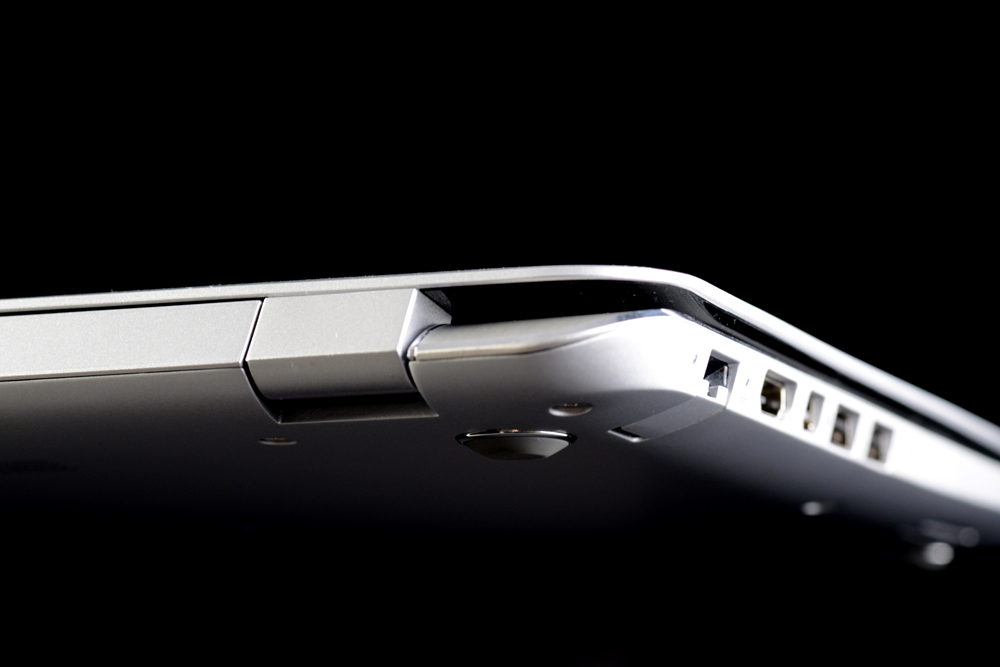
The Folio’s 0.75-inch thickness accommodates several full-sized ports; no dongles needed. It has an SD card slot, three USB 3.0 ports, VGA, DisplayPort, Ethernet, SmartCard reader, and combo headphone/mic. This is HP’s first docking Ultrabook, so users can expand the ports when sitting in the office. While we wish there was at least one more USB port, this is more than you get with most Ultrabooks.

Plenty of input options

The spill-resistant keyboard is the same as you’ll find on most EliteBooks, meaning it share the same flaws and triumphs. The matte coating on its Chiclet keys improves accuracy by keeping fingers from slipping, there’s plenty of space between them, and travel is decent (though not as good as you would find on a ThinkPad). The backlight is sufficient to keep keys visible in low light, but weaker than we’d like.
Unfortunately, some keys on the right edge are smaller than they need to be in order to make room for the Home, Page Down/Up, and End keys. Since there’s plenty of room on either side, HP could have found a way to make Backspace and Enter full-sized. As it is, we had to download a keymapper to keep us from accidentally hitting Home when we reached for Backspace.
hp elitebook folio 9470m trackpad and keyboard
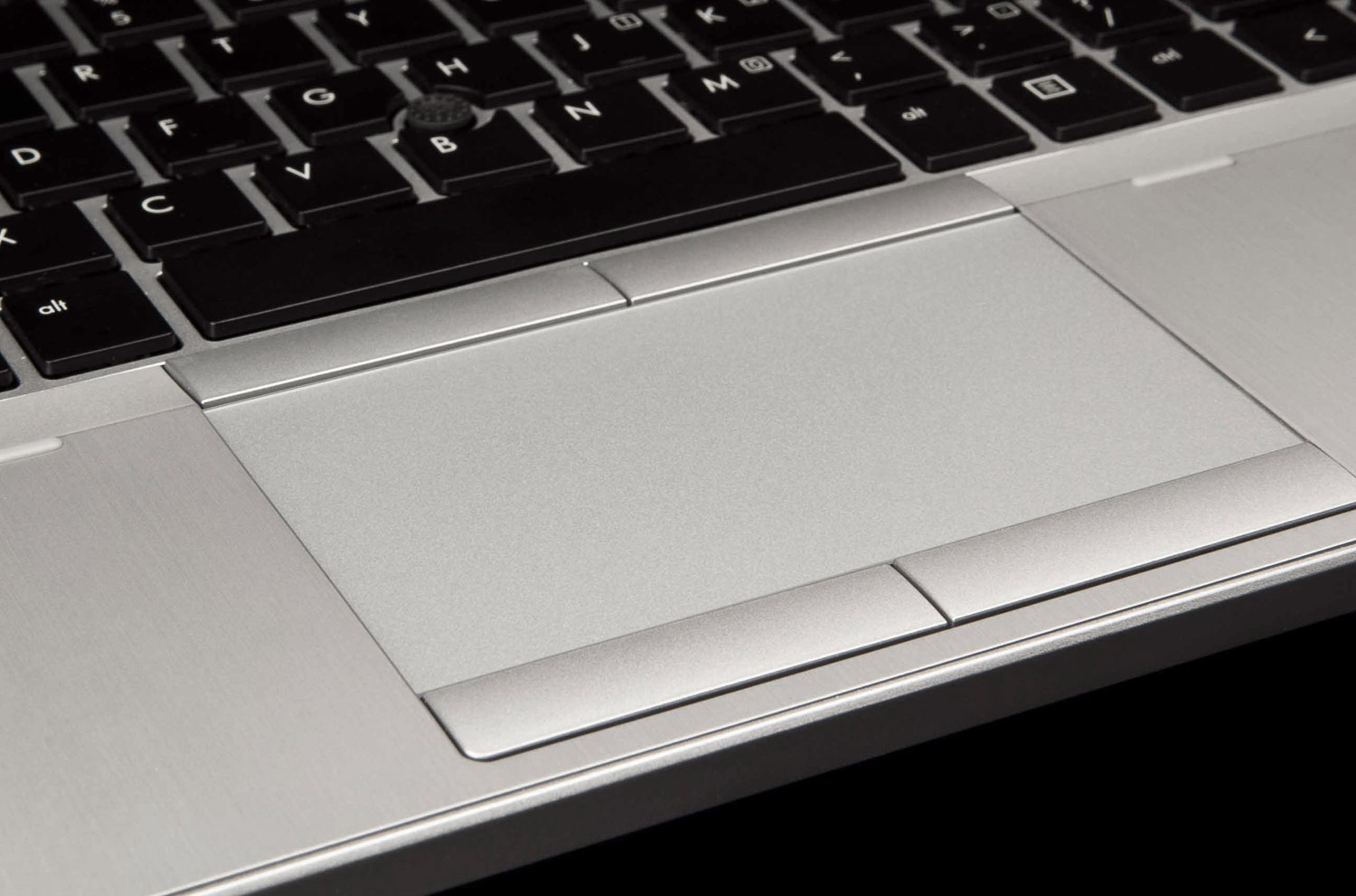
The space below the keyboard is large enough for a generous touchpad and two sets of mouse buttons. The top pair of buttons work with the Pointstick sitting between the G, H and B keys. Though this is an Ultrabook, there’s no “clickpad” nonsense: You get distinct left and right mouse buttons. This prevents issues with finger misplacement and accidental multitouch gesture activation.
There’s no touchscreen here, so you have to rely on the touchpad to bring up Windows 8 charms. We pulled off these gestures plus basic things like pinch-to-zoom with no issues. The buttons don’t click down in a very satisfying way, but they never gave us problems. If you prefer the Pointstick for navigation, you’ll find it precise and easy to use.

Disappointing display

The lack of touchscreen on the Folio 9470m is only a drawback if you’re dedicated to using Metro-style apps. Not including it keeps the cost and the weight down, the latter being the most important for an Ultrabook at this size. We can forgive not having touch, but we cannot forgive a 1366 x 768 resolution on a 14-inch display, especially at this price. Even for a business notebook, this is unacceptable. The ThinkPad Carbon X1 manages 1600 x 900 pixels in the same size display and starts at $100 less.
hp elitebook folio 9470m display
On top of that, the display isn’t a very good one. A matte screen usually indicates wide viewing angles and good sunlight readability, but here it means neither. You don’t have to lean the screen back very far or get too much off center before distortion kicks in. At the highest brightness the Folio does all right on an overcast day, just not on a sunny one. Plus, colors look muted and lack brilliance.
Audio quality isn’t exactly tuned for rocking out, but you’ll do fine with presentations and Web conferences thanks to plenty of volume from the speakers.

Keeping it cool

The EliteBook Folio remains fairly quiet when not connected to the AC adapter. When hooked up the fan runs constantly, though noise levels aren’t that noticable in quiet environments.
When pushed, the Folio didn’t get noticeably hot, even after benchmarking and playing HD video at full screen for 15 minutes.

True ultra-portability

Our review unit’s 3.6 pound weight is light for a 14-inch laptop, though isn’t as impressive as the ThinkPad Carbon X1 (3 pounds without a touchscreen) with the same size screen. Still, the Folio is still very portable and won’t put undue stress on your back or shoulders when you carry it around everywhere.
hp elitebook folio 9470m battery compartment and fan
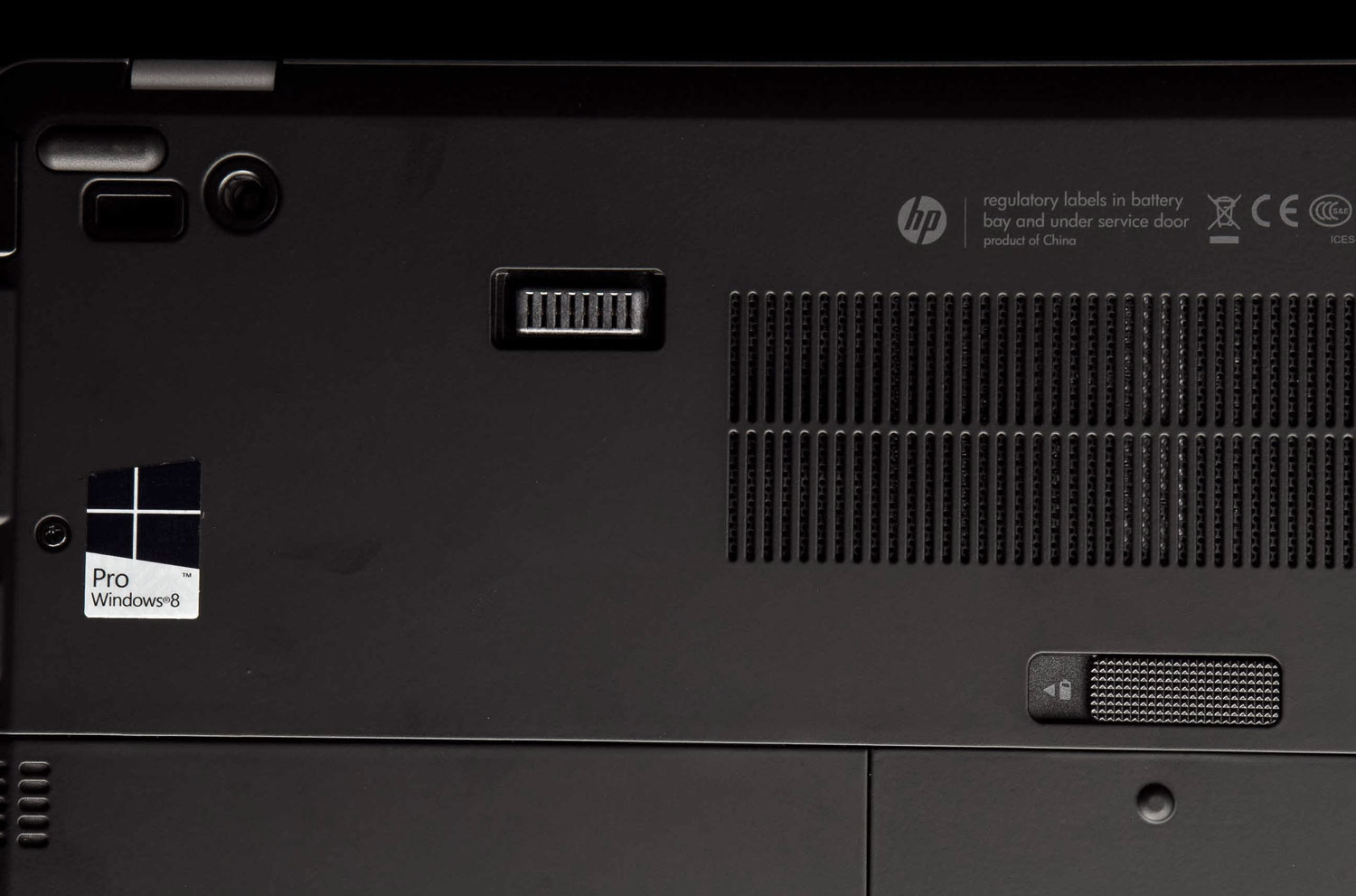
The battery doesn’t jut out as it does on other EliteBook models we’ve tested. It’s Ultrabook compact, yet still user removable. If you need to carry an extra for even greater longevity, it’s possible to swap it yourself (unlike almost every other Ultrabook ever). HP also makes a slice battery ($199) that adds 10 hours of battery on top of the juice you get out of the regular one. As equipped, it lasted 6 hours 35 minutes on the Peacekeeper battery rundown test. Under normal usage, you can probably get about 7 and a half hours or more. When asleep, the Folio sipped power, meaning you might be able to get through a whole day of off and on use without the need to lug the AC adapter along.

No touchscreen? No problem

Using Windows 8 without a touchscreen isn’t that big a deal, especially for business users who are more likely to use programs in Desktop mode and not many of touch-centric apps. If you’re used to the touchscreen experience it may take a while to remember that you can’t reach up and tap icons. If you come from Windows 7, the transition isn’t dramatic.
Our review unit came with very little pre-loaded software beyond the Windows 8 essentials. Cyberlink Media Suite, PDF Complete Enterprise Edition, and Evernote are the most prominent besides HP’s business tools. This includes a program for the fingerprint reader on the right edge of the deck that gives you an extra way to login and keep your data safe. Additionally, you can choose to have the HP Premier Image installed, which includes an anti-virus program and EliteBook business software. Further security features include an embedded TPM chip, SmartCard reader, and HP BIOS Vault.
The 720p webcam above the display isn’t the best teleconferencing portal. In well-lit areas the captured image looked blown out with too much noise. It goes downhill in low light.

Not as powerful as it could be

HP equiped our Elitebook Folio 9470m review unit with a 1.8GHz Intel Core i5 3427U CPU, 4GB of RAM, integrated Intel HD 4000 graphics, and an 180GB Intel SSD (the least expensive configuration offered). This is almost identical to the internals on the ThinkPad Carbon X1, but the Folio doesn’t always match up in synthetic benchmarks. SiSoft Sandra’s Processor Arithmetic benchmark turned in a score of 28 GOPs while 7-Zip reached a combined result of 5,372 MIPS (the X1 got 7,776). PCMark 07 turned in a score of 4,595, below the X1′s 4,926.
 hp elitebook folio 9470m back ports
Overall, the Folio is a solid but not impressive performer. We noted this in our hands-on testing as well. It boots very fast – around 11 seconds – and when doing basic tasks with medium-load programs, everything runs smooth. When we pushed the laptop a bit we got the normal slow down at very intense levels (dozens of browser tabs, batch processing in Photoshop), but nothing that suggests it can’t handle some heavy-duty work when called for.
The Folio scored 4,180 and 601 in 3DMark06 and 3DMark11, respectively. This laptop won’t make a robust work machine for graphics-heavy applications thanks to the integrated graphics, but can convert a video or render high quality images in good time.

Conclusion

The HP EliteBook Folio 9470m, like the Folio 13 before it, offers a nice balance of portability and power with long battery life. There are some significant drawbacks, the biggest one being the display. Our $1,349 base configuration isn’t the only one available. HP also offers the same internals, plus a 1600 x 900 display, for $1,549. That’s still more expensive than the non-touch ThinkPad Carbon X1, which has a better overall display and keyboard. It does not have near the same number of ports, and that’s a big consideration, especially for business users. As is the ability to connect to a dock, something else the Carbon X1 lacks.
Ultimately, whichever aspects are more important to you will determine if the EliteBook Folio 9470m is the better choice. If ports and a removable battery are high on your list, you should definitely consider HP’s offering.

Highs

  • Slim and light for a 14-inch laptop
  • Lots of ports
  • User-removable battery that doesn’t jut out
  • Pointstick and touchpad with discrete mouse buttons

Lows

  • Display resolution and quality is too low
  • Small keys on right edge of keyboard
  • Uninspiring performance
Read More
Posted in | No comments

Vizio CT14-A4 Review

Posted on 03:07 by Unknown


                                                Vizio-CT14-A4

Vizio is a well-known name in consumer electronics – but not for computers. The company only got into the computer business within the past year and is jumping right into one of the most popular segments of the market: Ultrabooks. Dubbed the Thin and Light, Vizio’s new 14-inch CT 14-A4 model is clearly hoping to stand out from the crowd.
The $849 price will turn some heads, but can the Thin and Light hold our interest? Read our full review to find out.

Full-on Monet

Vizio definitely has the Ultrabook aesthetic down. You’ve got an aluminum body that tapers down to razor-thin edges, a feathery weight, wide keys, and a buttonless clickpad. If it were made to sit on a shelf, the Thin and Light would be a good example of beautiful design. Of course, laptops are not made to sit on shelves.
That tapered edge may look good, but it feels terrible. The edges cut into our palms and wrists as we typed, making it uncomfortable to use the laptop. Except for the soft-touch bottom, there’s an industrial feel that doesn’t make the laptop very inviting to touch, and this discomfort continues on the keyboard.
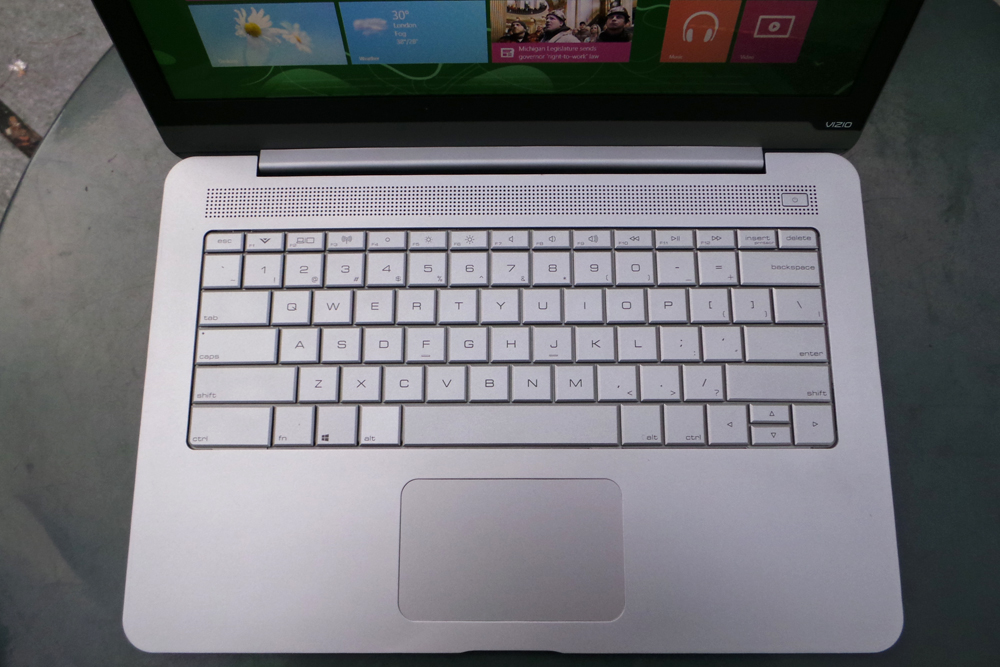
VIZIO CT14 A4 14 keyboard top downThough the keys themselves are big, we noticed a considerably larger amount of dropped letters than usual when typing on the Vizio. Again, the typing experience is pretty uncomfortable, especially when we had to type harder to avoid dropping letters. The layout is also a bit odd. The Ctrl key is wider than it needs to be, which pushes the Alt key farther over and shortens the Space bar. This made executing keyboard shortcuts more difficult.
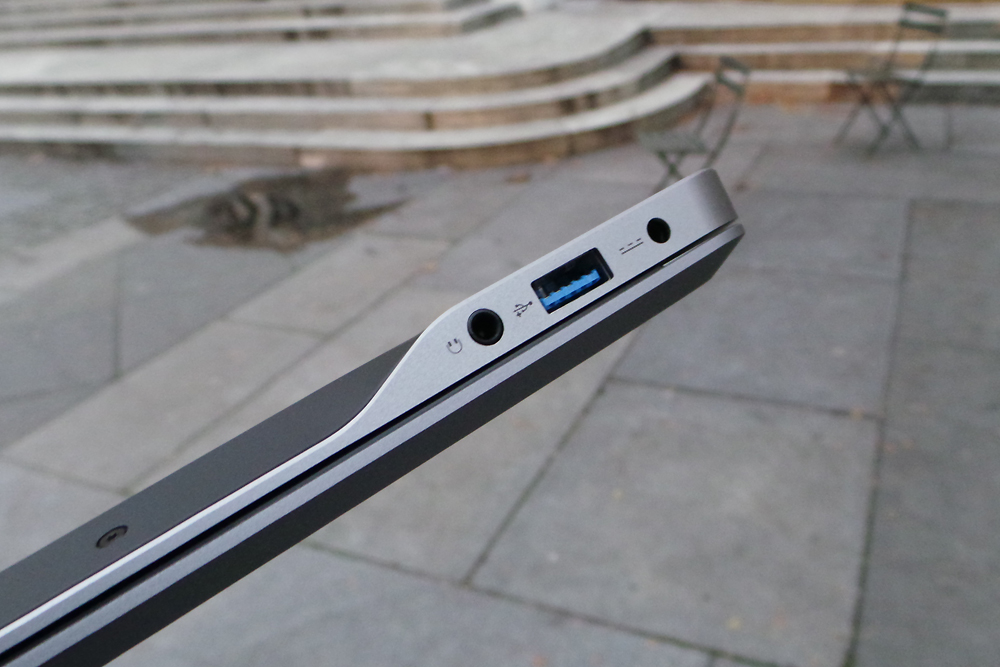
Ultrabooks often have to sacrifice ports to achieve a thin profile, but we think Vizio went a bit too far with this laptop. There are only two USB 3.0 ports, HDMI output, and a headphone jack. Both the memory card reader and Ethernet ports are nowhere to be found. Even the Samsung Series 9, which has a similar overall design, manages to include an SD card slot.

Windows 8 without a touchscreen? Send help

The Vizio Thin and Light is a Windows 8 machine, but the 14-inch display is not touch-enabled. Touch isn’t a requirement for the OS, and it often doesn’t add as many benefits as headaches. However, if you don’t have a touchscreen, you should at least have a good multi-touch trackpad. Unfortunately, the Vizio falls short here as well.
To start, the touchpad is a little small for a system this size. It has a friction-free surface and is fine for basic navigation and clicking. However, executing essential Windows 8 gestures is a frustrating experience. There were only a few times that we successfully brought up the Windows charms and other panels accessed by swipe from the touchpad edge. Most of the time, they didn’t register at all.
If the touchpad doesn’t work, you can access the functions by moving the mouse to hotspots in the corners, but that’s the least efficient and least intuitive way to navigate Windows 8. It also shouldn’t be necessary.

Bloatware gets the boot

We have to give Vizio props for the lack of bloatware. You won’t find any annoying bloatware or pre-loaded programs causing windows to pop up in your face with this laptop. Vizio gives you Windows pure and simple, which is pretty rare.

A decent display

We’re glad to see a 1600 x 900 pixel resolution on the 14-inch screen instead of the usual 1366 x 768. The display’s rich colors and deep blacks make video, Web pages, and images look great when you’re in the sweet spot. Viewing angles aren’t very wide, so positioning the screen at the right angle proved to be very important.
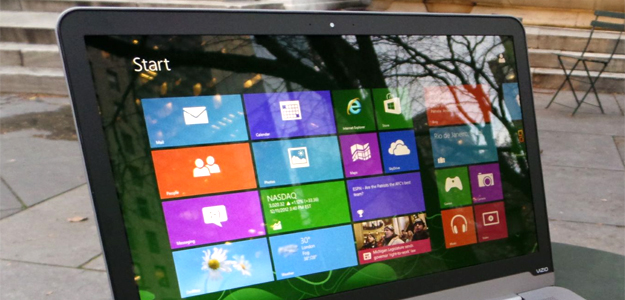
VIZIO CT14 A4 14 keyboard screenBecause of the limited viewing angle, the Vizio doesn’t make a great multimedia machine. Plus, despite being positioned at the top of the deck, the speakers don’t produce very voluminous audio. The sound quality is tinny, which is expected from Ultrabooks, and you’ll want headphones or external speakers if there’s any background noise.

One hot body

During our use, the Vizio got noticeably hot on the bottom whenever we pushed the machine. Multitasking made the laptop somewhat toasty, but playing videos, games, and performing benchmark tests increased the heat to uncomfortable levels. The top of the Ultrabook can also get hot, especially toward the top of the deck.
With such high temperatures, the fan is certainly needed. When it kicks on, the sound is clearly audible in quiet rooms. That being said, the fan noise isn’t too noticeable unless you’re pushing the notebook hard.

Portable and Power Hungry

For a 14-inch system, at 3.4 pounds, the Vizio is pretty light. It has a footprint small enough to fit many 13-inch laptop bags, making it a great size for travel. However, the value of an ultraportable like this goes down if battery life isn’t up to par – and that’s unfortunately the case here.
VIZIO CT14 A4 14 left portsDuring normal use – which included multitasking with Chrome and Firefox, using Microsoft Word, and streaming video and music – the Vizio only lasted around 4 hours before needing to be plugged in. In the Peacekeeper benchmark test, the battery died after just over 3 hours, which isn’t nearly enough battery life for an Ultrabook – even at this size. So, don’t leave the A/C adapter at home.

Average performance

The Vizio Thin and Light is powered by a 1.7-GHz Intel Core i5-3317Un. This type of ultra-low voltage processor is standard on many Ultrabooks. The notebook also has 4GB of RAM and a 128GB SSD backing it up. The Thin and Light handled everyday tasks well, opening files and apps quickly and keeping up with intense multitasking.
In benchmarks, it turned in average scores. SiSoft Sandra’s Processor Arithmetic benchmark reached 30.26 GOPS while 7-Zip turned in a combined score of 6,931 MIPS. The Vizio scored 4,682 in PCMark 7. None of these are stellar results, but are within the average range and are good for an Ultrabook of this price.
As with most other Ultrabooks, the graphics performance is good enough for casual gaming and HD video, but that’s about it. 3DMark 06 and 3DMark 11 returned respective scores of 5,253 and 616, which means if you’re looking for a good gaming laptop with topnotch graphics, you’ll want to look elsewhere.

Conclusion

The $849 Thin and Light is Vizio’s freshman effort in the Ultrabook category, and it’s clear that the company has been paying attention to what people want from these machines. However, the execution doesn’t quite live up to the ideal. You have a computer that looks good but feels uncomfortable, promises long battery life but doesn’t deliver, and runs an OS made for touch interaction with a clickpad that seems to dislike being touched.
That’s too bad, because there are some positive aspects to the Thin and Light, and it’s the kind of Ultrabook you want to like when you see it. In the next generation, we hope that Vizio pays a little more attention to how the laptop feels.

Highs

  • Attractive design
  • Light for a system this size
  • No bloatware

Lows

  • Uncomfortable design
  • Difficult keyboard
  • Not enough ports
  • Touchpad doesn’t make Windows 8 easy to use
  • Short battery life
Read More
Posted in | No comments

Origin EON17-SLX Review

Posted on 03:05 by Unknown

                                                   Origin EON17 SLX Review back
Gamers looking for portable entertainment have always considered the 17.3-inch gaming laptop as the pinnacle of mobile entertainment. Many mainstream consumers look at these products with confusion. Why buy a giant brick that costs thousands of dollars? Gamers have the answer: power. And that’s what Origin’s new EON17-SLX is all about.
Even the most basic model comes equipped with an Nvidia GTX 670M graphics processor, an Intel Core i7 quad processor, and 4GB of RAM, which puts it on par with well-equipped configurations from many competitors. And that’s just the beginning.
With upgrades, the SLX can cram in not one but two GTX 680M graphics processor, a Core i7-3940XM (the X stands for Xtreme!) processor, 16GB of RAM, and dual solid-state drives. This is how our incredibly well equipped review unit arrived. It also came with a jaw-dropping price of $4,694.
You don’t have to spend that much, however. The base model starts at $1,899 and $3,000 will get you a machine with a lot of customization. Unlike most laptops, which can be just slightly modified, this behemoth is a platform that can be tweaked to your taste.

A giant arrives

No one will mistake the Origin EON17-SLX for anything besides a gaming laptop. It’s big, bulky, thick and built with matte black plastic, which is perfectly complemented by more matte black plastic. Oh, and there’s a bit of black metal around the keyboard, but it’s hardly noticeable.
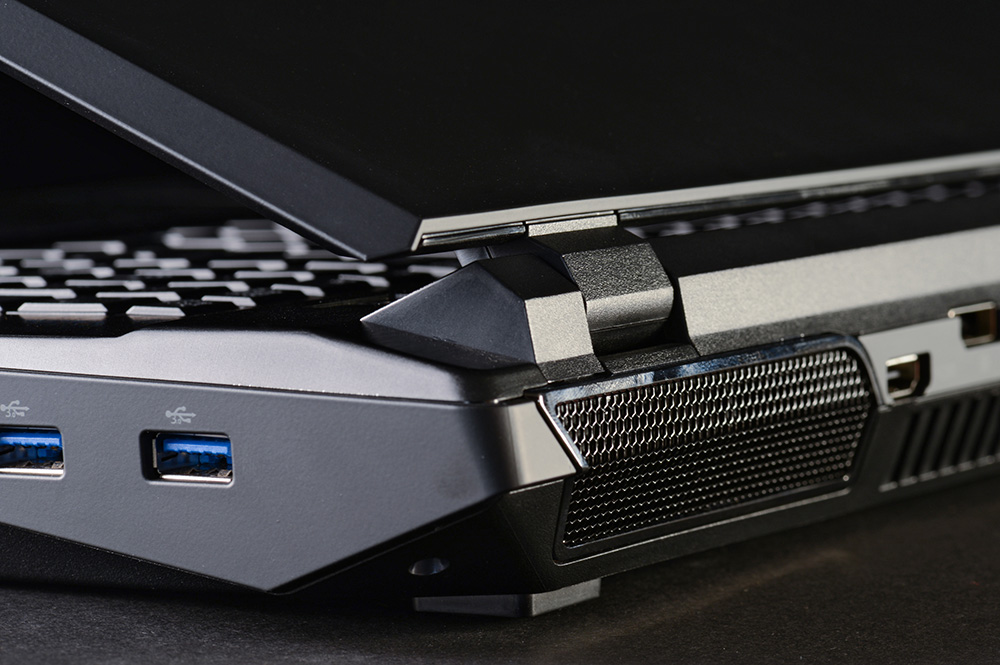
Origin EON17 SLX Review rear hinges
Competitors like Alienware and ASUS clearly offer better aesthetics. Gaming laptops are often more focused on function than form, but it’d be nice if Origin at least threw in a custom paint job. That would help the SLX look worth its price.
Handling the laptop roughly revealed a strong chassis. No groans of protest could be heard when we picked up the laptop from one edge, and all of its surfaces feel solid. Build quality is also good. Panels are perfectly fitted and the gaps between them are small.
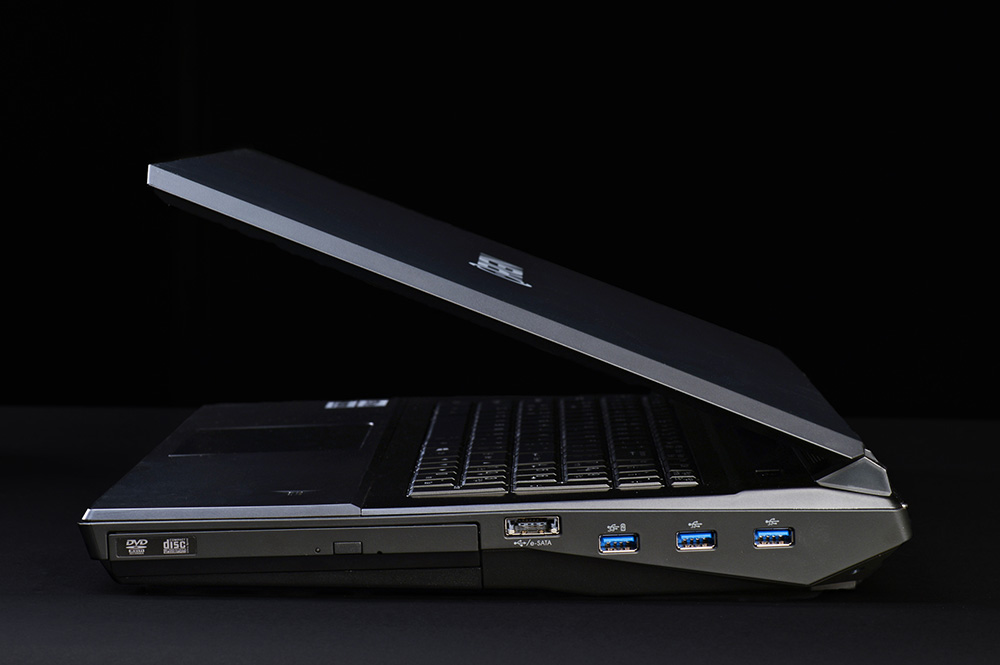
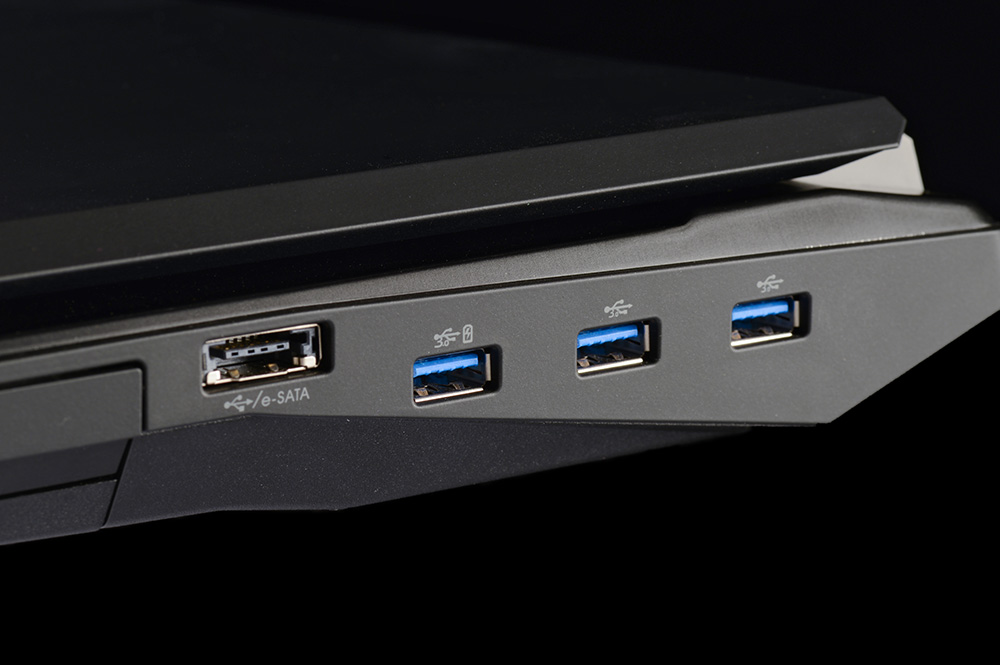
Connectivity? Yea, it’s got that. There are four USB 3.0 ports, an eSATA/USB combo port, HDMI, DisplayPort and four audio ports handled by a Sound Blast X-Fi sound card. You can even have a TV tuner, though our review unit was not equipped with that option.

A big and average keyboard

There’s plenty of space for a full-sized keyboard and numpad on the SLX. Both are of average quality. Key travel is fine, and key feel is satisfactory. There could be better definition between keys, but we had no trouble touch-typing. Everything is up to par without going much beyond it.
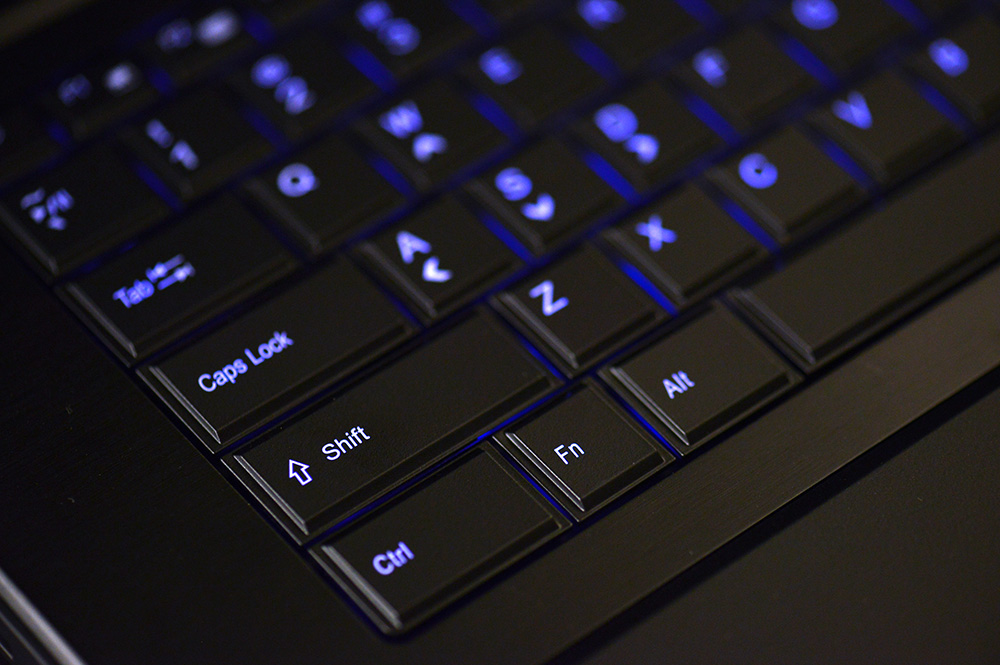
All versions of the SLX have a backlight that allows for seven custom colors over three different zones. A software driver controls the backlight, but it was a bit finicky during our tests. It crashed on one occasion, which rendered the backlight inoperable until we rebooted the system. The controls have an amateur look and feel. We like that Origin includes multi-zone backlighting, but Alienware’s Alien FX is still king of gaudy LEDs.
Origin EON17 SLX Review keyboard backlighting
Touchpad quality, like the keyboard, is just fine. It’s large and works well with multi-touch gestures. There’s no particular texture to it, and the integrated mouse buttons feel a bit indistinct in action, but neither issue is terribly distracting.

The laptop that rocks the house

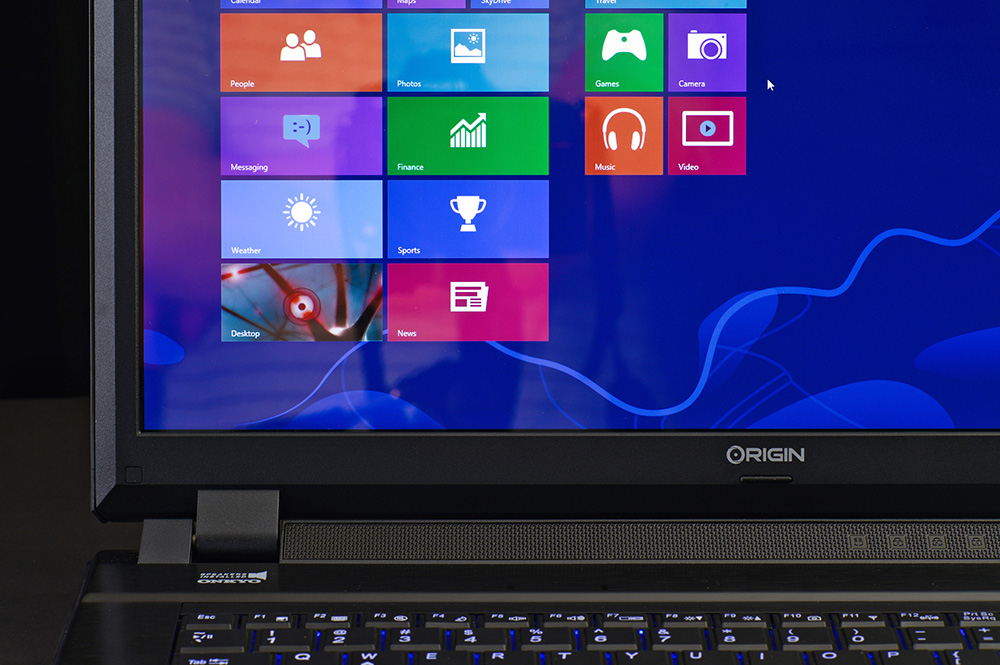
The SLX performed well in our display tests. It rendered 97 percent of the sRGB gamut while providing solid contrast and black level results. The laptop’s 1080p resolution is the only option and offers a crisp, clear picture. Even overall brightness was excellent, which means the glossy panel could be used in a sunlit room.
Origin EON17 SLX Review display
However, we did note some uniformity issues in our tests. Our benchmark reported that portions of the display’s right side varied in brightness by up to 25 percent when compared to the center, but our eyes weren’t able to spot any real-world impact from this problem.
Though solid overall, image quality doesn’t rank above average. Gaming laptops offer a higher caliber of display than their smaller cousins. Though the SLX blows away the average laptop, it comes in a bit behind competitors like Samsung’s Series 7 Gamer.
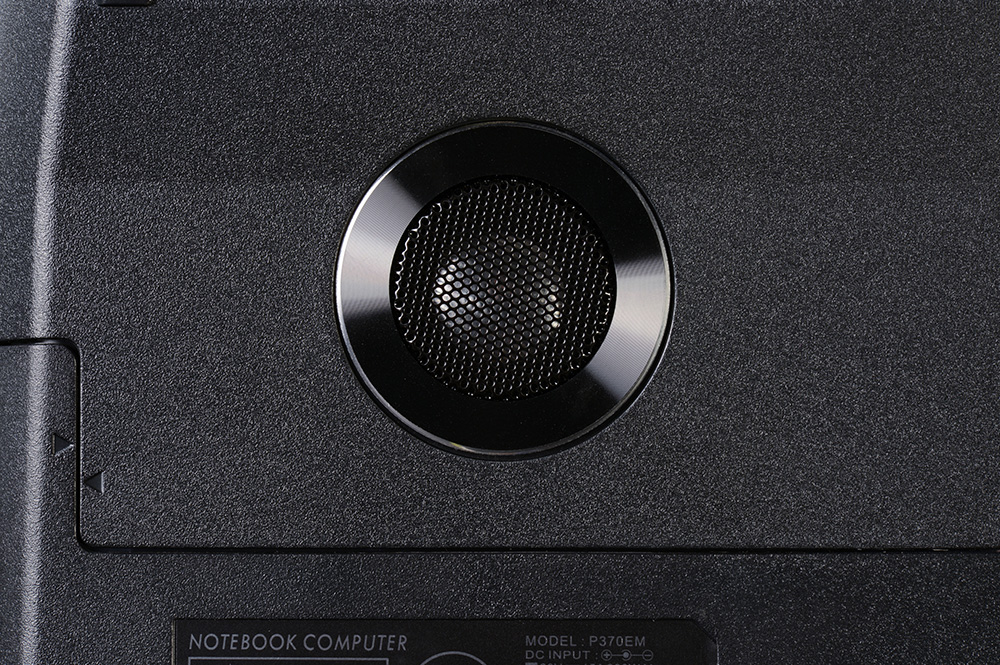
Origin EON17 SLX Review bottom grill
Audio quality is a high point. It’s loud, clear, and provides a fair amount of bass. While watching a variety of high-definition movie clips, we noticed that even action scenes caused minimal distortion and remained balanced. There’s also no vibration from the chassis. Users who aren’t concerned about audio may never feel the need to hook up a pair of external speakers.

Maximum cooling

Our review unit came with not one but two video cards to cool. That’s a lot of hardware for any laptop to deal with, yet the SLX managed without issue. Even Furmark, a graphics stress test that is notoriously demanding, raised external temperatures no higher than 98.5 degrees Fahrenheit, which is a great result.
Fan noise is the price paid for cool operation. At idle the laptop produced a barely noticeable 41.5 decibels of sound. Loading it with a 3D game, however, increased noise to a distracting 52.7 decibels. Gamers be warned: cooling two video cards in one laptop requires an aggressive cooler.

Best left at home

Portability? You’re kidding, right? The SLX weighs in at about 13 pounds and is up to two inches thick. It won’t fit in many laptop bags and, once there, will require a strong set of shoulders to haul it around. Anyone who carries their laptop more than once a week will find the SLX tiring.
Origin EON17 SLX Review right side ports
You’ll need to bring the power brick as well; battery life is terrible. Even our light-load Reader’s Test drained it dry in just 3 hours and 1 minute. The Web browsing test sucked down the battery in 1 hour and 43 minutes, and the Battery Eater load test ate through it in 1 hour and 40 minutes.
Power testing showed why endurance is poor. The laptop drew 88 watts of power at idle and 135 watts while running the 7-Zip processor benchmark. That’s more power than some desktops!
Conquering bloat

Origin doesn’t ship its laptops with much in the way of pre-installed software, and the SLX is no exception. The only application you’ll notice is the free password protection software that can work in conjunction with the fingerprint reader. It is a bit distracting, and while we appreciate added security, we think most users will ignore it.
Other software includes a 3D photo viewer, CyberLink PowerDVD, EVGA’s GPU overclocking app, and the previously mentioned tool that adjusts the keyboard backlight. All of this is unobtrusive. You’ll only notice it if you need to use the software.

Look at it go!

The hardware in our review unit was undeniably impressive. It packed in both an Intel Core i7-3940XM quad-core and two GTX 680Ms running in SLI. As if that weren’t already enough, Origin used its factory overclocking service to increase the processor’s maximum clock speed to 4.5 GHz.
SiSoft Sandra’s Processor Arithmetic benchmark reported a score of 116.92 GOPS, while 7-Zip turned in a combined score of 22,710. Both of these numbers beat our previous records by about 15 percent. They’re also higher than the figures produced by many mainstream all-in-ones and mid-range gaming desktops.
Origin EON17 SLX Review usb ports
This excellent performance carried over to PCMark 7, which reached a final score of 5,999. That score is, again, the highest we’ve ever recorded from a laptop. We were particularly impressed by the pair of solid-state drives operating in RAID0. The drives provided blistering performance and nearly made load times extinct.
As for the dual GTX 680Ms, they’re quick. Really quick. 3DMark 06 turned in a score of 29,011 and 3DMark 11 reached a score of 10,663. These scores are way ahead of the last Alienware M17x we reviewed, which had only a single GTX 680M, and also bests some gaming desktops like the Velocity Micro Vector Campus Edition and the HP Pavilion HPE h9.
Origin EON17 SLX Review keyboard
Our high-end configuration may in fact be overkill for many gamers. We tested The Elder Scrolls V: Skyrim, and Diablo 3 and found that both games ran at ridiculous framerates with every detail setting at max. There’s no game on the market today that can seriously challenge the hardware found in the Origin EON17-SLX.

Conclusion

Origin’s EON17-SLX is every gamer’s dream. It doesn’t just play games well; it sneaks behind them, puts them in a chokehold, and forces them to say bad things about their mothers. Only Nvidia 3D vision (an optional extra not found on our review unit), in combination with a demanding title at maximum detail, might challenge the hardware in this laptop.
We do wish that Origin had gone the extra mile and lavished the laptop with some aesthetic improvements. The company is small and can’t be expected to rebuild the chassis from scratch, but a custom lid or paint job would be nice. A laptop this outrageously expensive should look the part.
An entry-level SLX may have trouble competing against value leaders like the ASUS G-Series and the Samsung Series 7 Gamer. But our review unit, with its incredible price tag of $4,694, dominates everything. And, as we mentioned before, you don’t even have to spend that much. Buyers who drop down to a standard Core i7 (instead of the Extreme Edition), 8GB of RAM, and grab just one solid-state drive can get this laptop with two GTX 680Ms for just over $3,000. That’s a decent price for the fastest gaming laptop on the market today.

Highs:

  • The fastest laptop money can buy
  • Mid-range variants provide good value
  • High build quality
  • Great audio

Lows:

  • Expensive
  • Dull aesthetics
  • Poor keyboard backlight controls
  • Awful battery life
Read More
Posted in | No comments

HP Spectre XT TouchSmart Review

Posted on 03:02 by Unknown
                                           HP Envy Spectre XT Review right side                

Touch is all the rage with the youngins, these days, but that doesn’t mean all hardware manufacturers have taken to touch with equal vigor. Many are slapping touch on to existing platforms and shipping them out as new models, regardless of their similarity to what’s already on the shelf.
HP has given us reason to believe it’s taking the revolution more seriously with the Spectre XT TouchSmart. This is not a revision of an existing notebook; it’s a brand new model, and the TouchSmart name carries some weight. After all, this is the banner HP rallied under while it conquered the touchscreen all-in-one market back in 2009.
Certainly, the specifications impress. Our review unit arrived with a Core i7 low-voltage processor, 8GB of RAM, and a 500GB hard drive assisted by solid-state caching. All of this can be yours for a reasonable price of $1,3499. Let’s see if it can stand out from the horde of newly touch-enabled competitors.
Back to basics
The Spectre name was first uttered at CES 2012 alongside a new premium laptop, the Envy Spectre 13. It was the Envy to envy, a glass-lid design showcase that just happened to be a decent laptop. Though the less expensive Envy models were more practical, the Spectre absolutely stood out from the lineup.
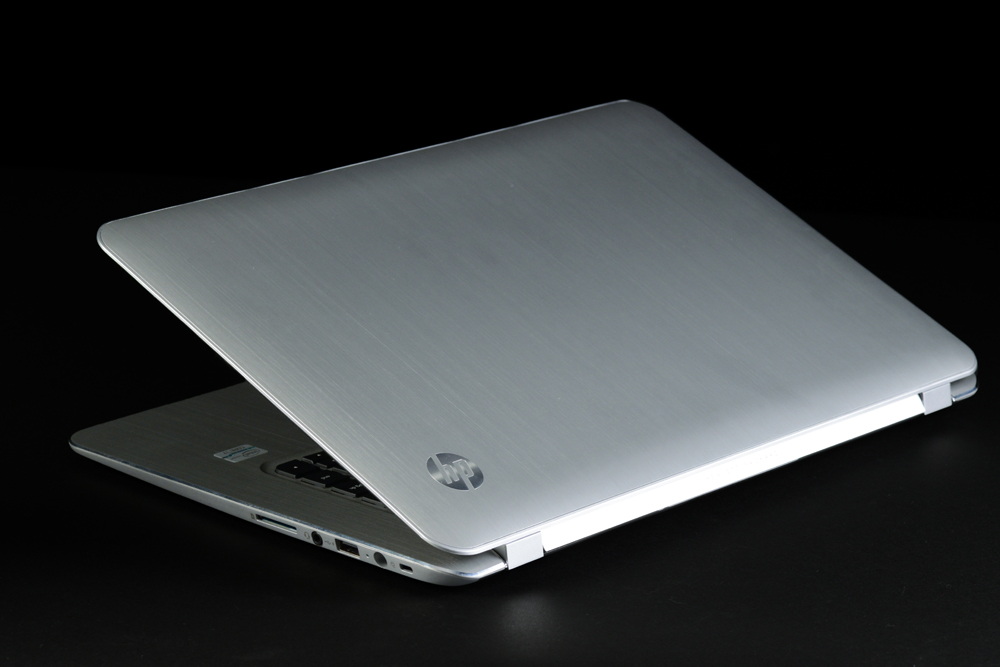
Alas, HP’s decision to take the Envy name down-market has affected Spectre as well. That’s not to say the Spectre XT TouchSmart is an ugly laptop. We think it looks good, but it’s no longer unique. Attractive black glass has been exchanged for the elegant silver metal used by everyone in this business.
Build quality is generally up to the standards set by HP’s premium line. Chassis strength is high, panel gaps are small, and material quality is good.
Connectivity comes by way of Thunderbolt, HDMI, a combo headphone/microphone jack, a card reader, and three USB 3.0 ports. This selection stacks up well to the competition.
Not a unique touch experience
HP originally used TouchSmart to define its unique all-in-ones. Though not the first or only company to make them, HP set itself apart with a unique hardware and software solution designed specifically for hands-on use.
HP abandoned this approach in the Spectre XT TouchSmart. The touchscreen itself operates like any other, and HP bundled only a small handful of touch-capable apps. Windows 8 picks up the slack, so the touch experience is not handicapped. Still, this notebook is no different from any other touch-enabled PC on the market.
HP Envy Spectre XT Review bottom left corner
HP Envy Spectre XT Review corner angle
HP Envy Spectre XT Review hp logo
HP Envy Spectre XT Review keyboard angle
Keyboard quality is disappointing. While there’s plenty of space, and individual keys are well-defined, key feel is soft and spongy. We found ourselves mysteriously missing keystrokes because our fingers could not accurately discern when a key had been depressed far enough to activate it.
Backlighting is standard and is activated via a keyboard shortcut. Only one brightness setting is available, however. We also don’t like how HP always lights the keyboard backlight shortcut when backlighting is not active. This makes the key easy to find in the dark, but it also distracts when watching movies in a dark room.
Thankfully, the touchpad is excellent. Though the left/right mouse buttons are integrated, the travel of each is excellent and the activation area is large. Multi-touch gestures are wonderfully smooth and the edge of the touch surface is well defined. The Spectre XT TouchSmart has one of the better touchpads we’ve recently used; which is a bit ironic, as its high quality discourages use of the touchscreen.
HP gets serious about laptop dispays
Quality displays were common for Envy laptops but were often an optional upgrade. That’s not the case here. HP has popped in a 1080p IPS panel that made an excellent first impression.
Our tests revealed the display to be among the best available in a modern Ultrabook. It renders 80 percent of the sRGB scale and reaches an excellent peak brightness of 303 nits. It also offers deep black levels and excellent overall contrast.
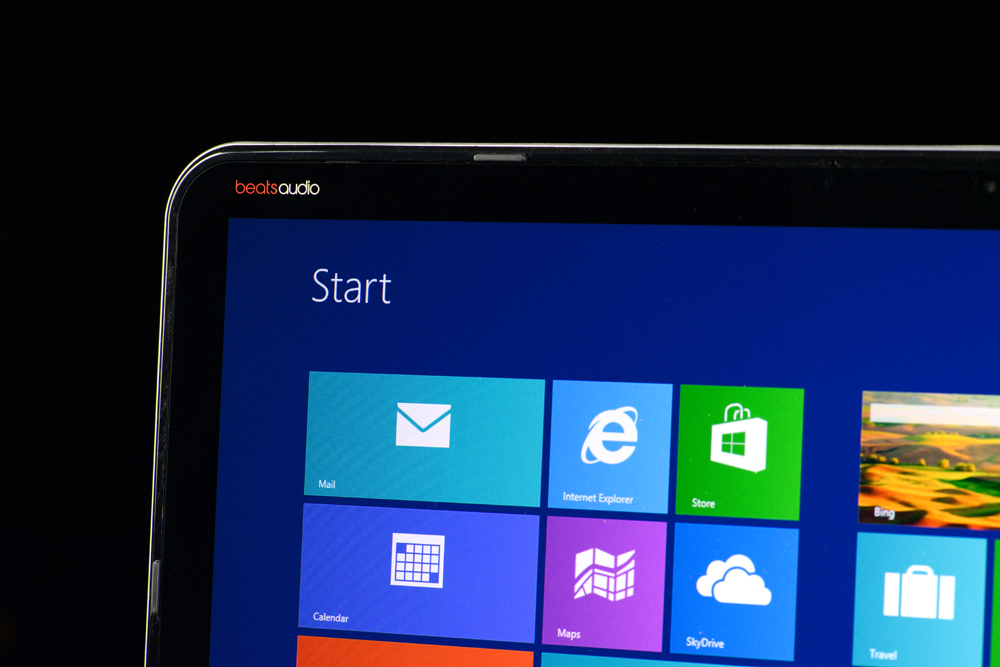
HP Envy Spectre XT Review left screen cornerWe have absolutely no complaints and can confidently rank this panel above even those found in Asus’ Zenbook line. Only gaming laptops can exceed the quality found here.
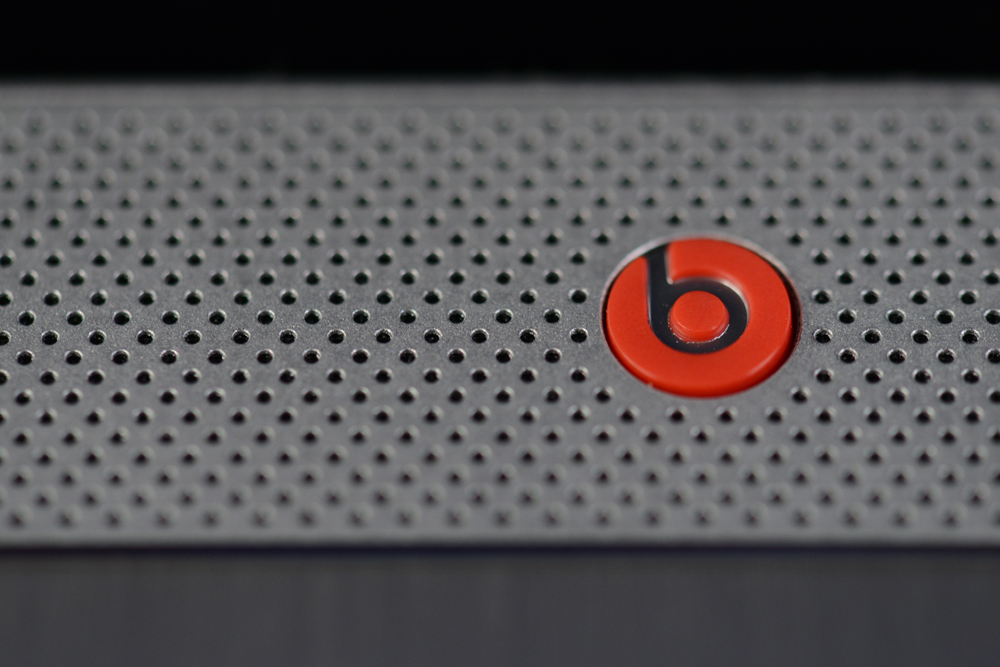
Similar praise is given to the system’s ear-ringing speakers. These suckers are loud yet also capable of distortion-free music and movie reproduction. Beats branding is part of the package, too, which means the inclusion of excellent software audio controls. Most people will have no need for external speakers. 
Unwanted volume
Audio sometimes isn’t the only noise emitted by the Spectre XT TouchSmart. Though quiet at idle, our benchmarks revealed the system fan can emit up to 47 decibels at load. Most laptops of equal size are not as loud.
Temperatures do benefit from the aggressive fan. We recorded a maximum external reading of 99.7 degrees Fahrenheit while running the Furmark stress test. Idle temperatures maxed out at 83.1 degrees. These results are better than the average Ultrabook and indicate a system that is often cool and comfortable to use.
Just a little bloated
Bloatware is the bane of big-name PC manufacturers, and this premium system is no exception. There are a number of apps pre-installed, including Norton antivirus, and they slightly clutter the Windows 8 Start screen.
Windows 8 desktop users, however, will be happy to see a lack of unwanted icons. Only a few extras are pinned to the taskbar, and some, like Adobe Elements, are useful. HP has also gone light on software that launches a service at boot. System responsiveness benefits from this restraint.
No road warrior
Though technically an Ultrabook, the Spectre XT TouchSmart is also a 15.6-inch system. It feels bulkier than its 0.86-inch thickness implies and weighs in at almost five pounds. This is very much a “backpackable” system rather than one ready to be thrown in a small messenger bag.
HP was apparently aware of this and decided the system only needed a small 4-cell battery, which has a negative effect on endurance. In our tests, the system managed to surf the Web for just 3 hours and 41 minutes. This was extended to nearly 5 hours in our light-load reader’s test, but also reduced to just 1 hour and 55 minutes in the Battery Eater load test.
HP Envy Spectre XT Review corner
HP Envy Spectre XT Review beats audio
HP Envy Spectre XT Review power button
HP Envy Spectre XT Review laptop open angle
These results are below average, though not embarrassingly so, as most Ultrabooks offer just over 4 hours of Web surfing. Still, poor endurance combined with significant bulk makes the Spectre XT TouchSmart a poor choice for frequent travelers.
Our power tests reported that the system’s idle power consumption is around 14 watts when the display is at 50 percent. Running 7-Zip’s benchmark increased this figure to 26 watts. These numbers are higher than average for the category, though only by a couple of watts.
Time to flex!
Large systems like the XT are built to perform. The Core i7-3517U in our review unit (a standard feature!) did not disappoint. SiSoft Sandra’s Processor Arithmetic bench turned in a score of 43.43 GOPS, and our 7-Zip test reached a combined result of 8,243 MIPS. These figures are above average for Ultrabooks and are on par with dual-core desktop replacements.
PCMark 7 blew us away with its score of 4,727. This is far above average for the category and beat by only a few other high-end systems like the Asus Zenbook U51Vz, which is much more expensive. The result is particularly good for a laptop that offers a mechanical hard drive paired with a solid-state cache drive. Users can expect the laptop to feel snappy in typical day-to-day use.
Graphics performance, however, is weak. There’s no discrete GPU magic lurking inside – just Intel HD 4000. 3DMark 06 reached a score of 5,045, and 3DMark 11 came to 665. Both figures represent a laptop that can play many 3D games, but new titles will be restricted to low resolution and detail settings.
Verdict
The Spectre XT TouchSmart is representative of HP’s current strategy. It is a safe, solid system that takes no design risks. Every element is as adequate as it needs to be – and no more. 
What results is a laptop that looks nice but is less than the sum of its parts. Competitors offer more intriguing designs, better keyboard quality, and more endurance. Some even offer all three.
Technical excellence saves the XT from itself. We have not yet tested an Ultrabook with a better display, and the system offers strong performance in all areas except 3D graphics. Audio quality is enjoyable, as well, which may seal the deal for audiophiles.
All of this is offered for just $1,274. We think the ASUS Zenbook U51 and Apple Macbook Pro 15-inch are better, yet they are also much, much more expensive. Laptops like the Lenovo U510 and Dell XPS 15 are more appropriate competitors – and the XT stands up well against them.
Highs
  • Good build quality
  • Amazing 1080p display
  • Loud, strong audio
  • Excellent processor and hard drive performance
Lows
  • Ho-hum design
  • Vague keyboard feel
  • Short battery life
Read More
Posted in | No comments

Asus Taichi 21 Review

Posted on 02:59 by Unknown

                                  Asus Taichi review front                     

Whether or not you’re a fan of Windows 8, you have to admit that it has inspired laptop makers to get seriously creative with their designs. Some of it is an effort to take advantage of the operating system’s features and functions, but a lot of it is clearly peacock-level posturing. You can almost hear the companies saying I can make a more innovative PC than you can! as they show off displays that detach or twist 360 degrees.
Asus pioneered the tablet/keyboard dock form factor, so it’s possible the company felt the need to up the ante to get attention in a Windows 8 world. Enter the Taichi 21, a laptop/tablet hybrid with not one, but two displays. The extra screen on the lid opens up interesting possibilities for mainstream consumers, artistic types, and the enterprise set. It’s an innovative idea, but that doesn’t guarantee that the Taichi is a laptop worth owning – especially for $1,600.
Instead of bending over backwards like the Yoga, the Taichi offers you four different ways to use it: as a normal laptop (Notebook Mode), as a Windows tablet (Tablet Mode), and as a dual-screened device (Mirror and Dual-Screen Modes).
We flipped for the Dell XPS 12 and found inner peace with the Lenovo Yoga, but will the Taichi kick them both to the curb?
Notebook Mode
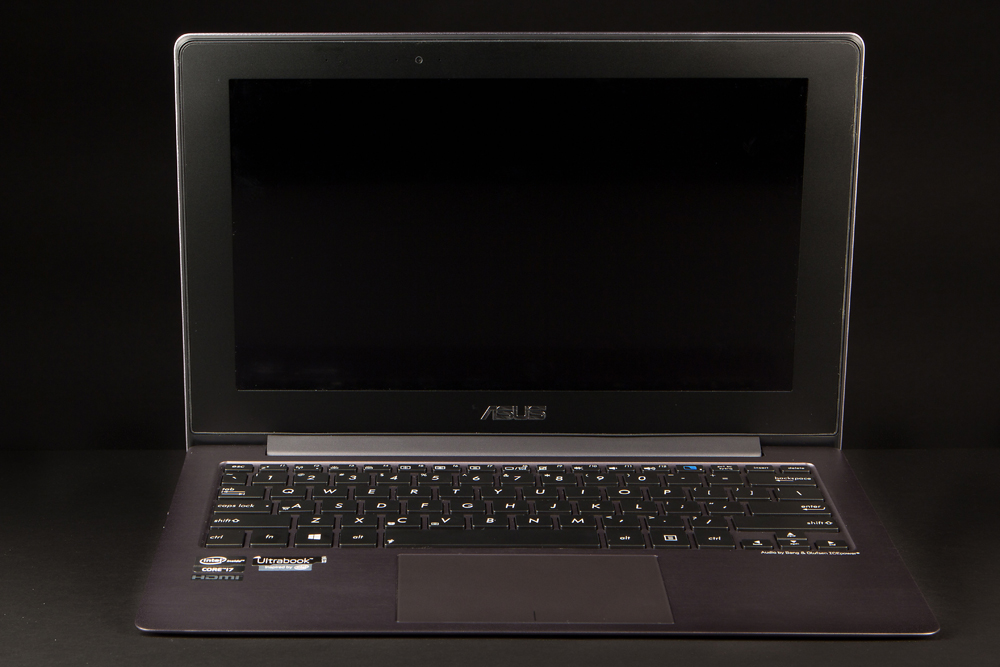
The Taichi is just like any other W8 Ultrabook when in Notebook Mode. It has an island-style, backlit keyboard; large, a buttonless touchpad; a slim profile (0.7-inches thick); and an impressively light weight of just 2.8 pounds. The general design language reminds us of the Zenbook series (with less shine), as do the keyboard and touchpad.
Even though the travel is shallow due to the laptop’s thinness, typing was still comfortable. There’s no firm tactile feedback, mushiness, or sticky or undersized keys, but the same can’t be said about the touchpad. The bottom left side on our review unit was stiff, which made clicking harder than usual.
A wide bezel surrounds the bright 11.6-inch IPS display. Color quality and contrast are good, and the Taichi is blessed with wide viewing angles. The full HD 1920 x 1080 pixel resolution means that text is crisp and HD videos look their best. Unfortunately, it also means that certain interface elements are tiny, which is most apparent when using desktop apps. Full-screen Windows 8 apps look better and didn’t make us squint.
Asus Taichi review front angle close
Asus Taichi review right side ports
Asus Taichi review left side ports close
Asus Taichi review front open screen off
Another drawback to this particular screen is that it’s not touch enabled. Granted, a laptop with two touchscreens would probably be excessively expensive, so this is not a deal breaker. Still, we often reached up to swipe the screen, forgetting that there wasn’t a touchscreen there.
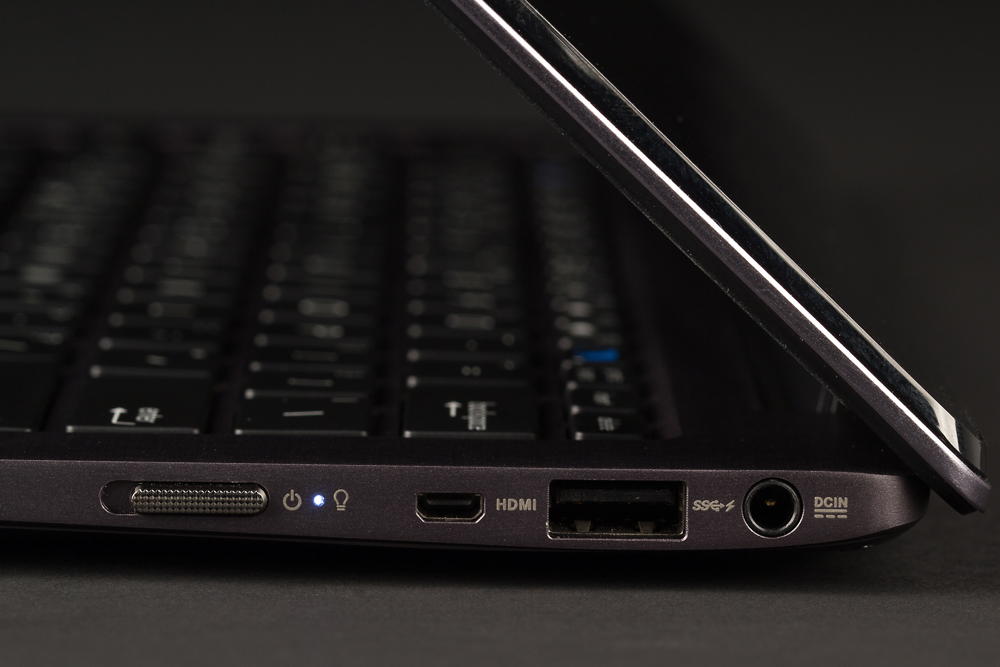
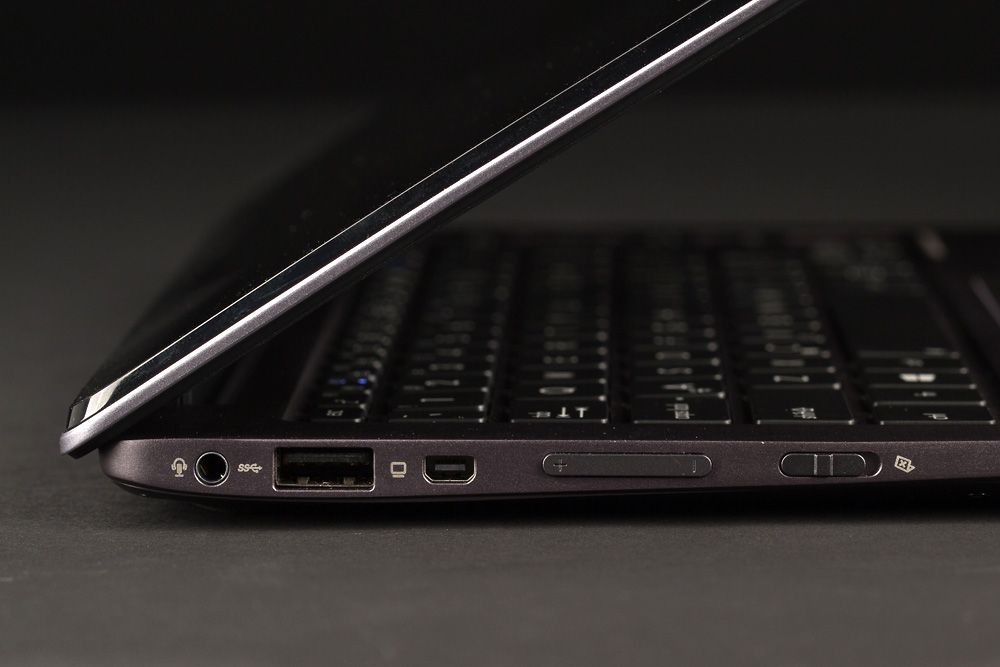
The Taichi is lacking in ports – a trait we’re unfortunately coming to expect with Ultrabooks. Still, the absent memory card reader is very disappointing. Though there are just two USB ports, they’re fortunately both version 3.0, making it possible to connect powerful peripherals. The Taichi also has a mini VGA and a micro HDMI port plus a combo headphone/mic jack. We’re not so into having mini/micro ports as it means some will have to buy new cables. A mini VGA-to-VGA dongle comes with the laptop, as does a USB-to-Ethernet dongle (they even have their own carrying pouch). Some don’t mind having to keep track of such accessories; others find it a hassle.
Tablet Mode
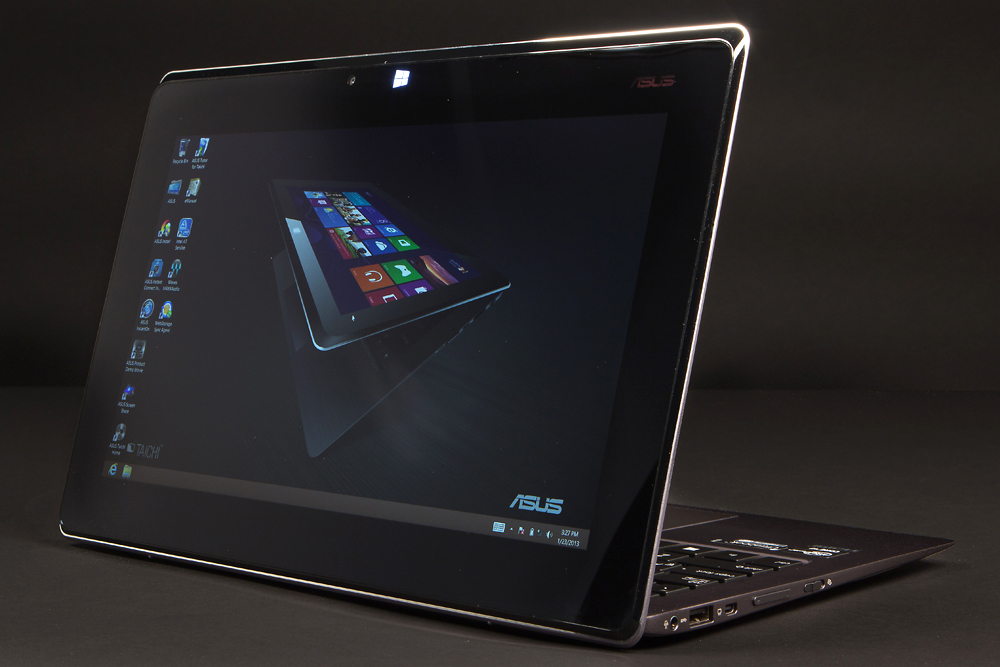
Closing the lid of the Taichi will automatically switch it to Tablet mode, activating the display on the lid. This 10-finger IPS touchscreen is a bit brighter than the one inside, but is otherwise the same size and resolution. The accelerometer activates in Tablet Mode, so you can hold the Taichi in portrait or landscape to work, play, or watch.
Readers might be thinking: what if you want to close the lid to put the laptop to sleep and not switch to the tablet? A switch on the left edge of the machine disables Tablet Mode and puts the machine to sleep when the lid closes. You have to remember to flip it on and off, though.
We found the display sensitive enough and accurate, even when dealing with less than touch-friendly desktop apps. It accurately recorded taps, gestures, and swipes, making for a great Windows 8 experience overall.
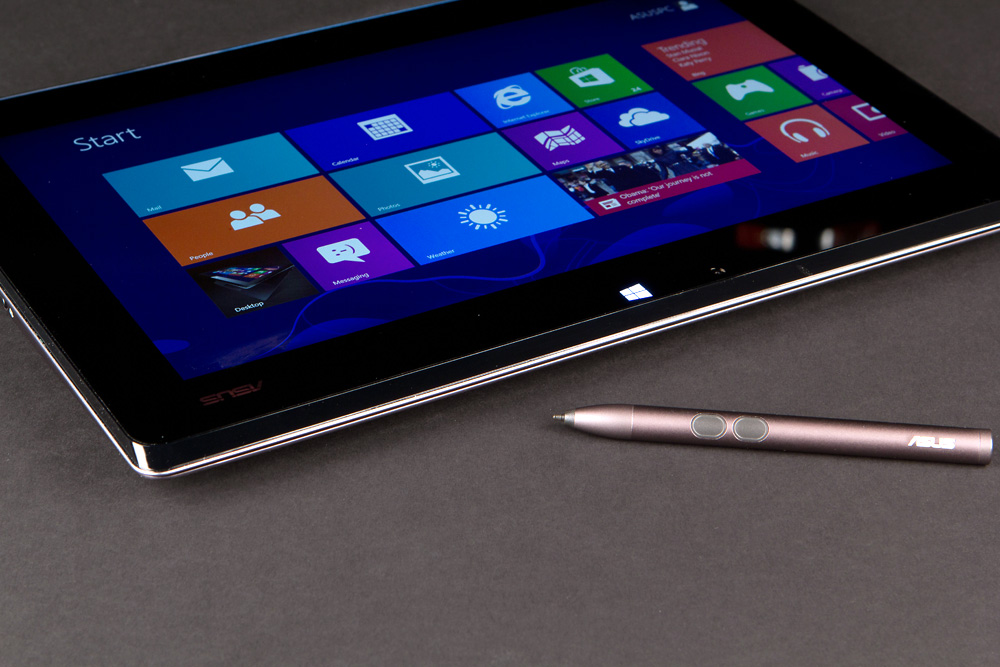
The more expensive configuration of the Taichi comes with a digitized stylus. There’s nowhere to store this pen inside the laptop’s body, but the included protective sleeve does have a place for it. Styluses may seem old school to some, but they do provide useful enhancements, especially in the realm of productivity.
Asus Taichi review front fixedWhen we activated the Windows handwriting recognition keyboard with the stylus, the included utility accurately translated our handwriting and made entering text a more natural experience than the regular floating keyboard. The stylus also activated the Pen Tools in Microsoft Office.
Though we enjoyed Tablet Mode, we ran into the same issue we did with the Dell XPS 12: it’s just too heavy for a tablet. In this case, the Taichi is over a pound lighter than the XPS 12, making it heavy to hold after a few minutes – an issue missing from detachable tablets.
Asus doesn’t bog the Taichi down with too many pre-loaded apps, but it does include a few perfect for tablet mode. We particularly like Supernote, a robust program that allows for both text and freehand input. There are also a couple of free games that work great on a touchscreen.
Mirror Mode and Dual-Screen Mode
Now we get to the fun part. You have two choices when working with both displays at once: showing the same content on both (Mirror Mode), or using the lid monitor separately (Dual-Screen Mode). A button on the top row of the keyboard brings up the Taichi launcher to facilitate switching between these and the other two modes.
Mirror Mode’s most practical uses are mostly in the realm of the enterprise user, and Asus touts it as a great tool for presentations. However, the company also mentions that it’s a good way for a group of people to watch a video – everyone doesn’t have to crowd in front. In this mode, both displays are active, so you can control it via touch from the back or with the mouse and keyboard in front.
Dual-Screen Mode allows the display on the lid to act as a second monitor, similar to connecting an external one. You can drag programs and windows from one screen to the other, though doing so is a bit awkward. Again, the most practical use is business-related (presentations).
Asus’ claim that the Taichi becomes two computers in this mode is highly suspect. It’s still one computer – just with two monitors. And though it’s possible to control either screen from both sides, they can’t really be controlled simultaneously. If the person in front of the keyboard is moving the mouse and the person on the other side decides to tap the screen, the mouse cursor will jump to the second screen.
Using the Screen Share utility, you can see what’s happening on the second screen while looking at the first, but the performance here isn’t smooth at all. The little window will show a low frame rate version of what’s happening on the other side. This is fine for presentations, but not for competitive games or interaction.
Another drawback is that there aren’t any other programs or apps made to take advantage of these modes. This may change in the future, especially if the Taichi sells well. Unless you’re into presentations or watching videos with large groups, these modes are wasted.
Double displays do not equal twice the performance
Powering two displays also cuts into performance. The unit we tested, the Asus Taichi 21-DH71, came with a 1.9GHz Intel Core i7-3517U processor, 4GB of RAM, and a 256GB solid-state drive. This configuration sells for $1,600. A less expensive configuration, featuring a 1.7GHz Intel Core i5-3317U chip, 4GB of RAM, and a 128GB SSD, costs $1,300. However, if you intend to use the Mirror or Dual-Screen Modes, we suggest getting the more expensive version.
The Taichi earned a combined score of 42 GOPS in SiSoft Sandra’s Processor Arithmetic test and a score of 8,203 in 7-Zip. Neither of these scores is stunning, but they’re in line with other Ultrabooks with the same chip, such as the Acer Aspire S7.
Asus Taichi review right angleIn PCMark 7, a test that measures overall performance, the laptop scored 5,015, which is comfortably above average and bests the S7 and the Dell XPS 12. However, we noticed that the laptop didn’t respond as speedily when in Dual-Screen Mode and decided to run the benchmark in this mode to see its impact. The score dropped to 4,127, which is below the XPS 12′s score of 4,677 (and the XPS 12 has a smaller Core i5 chip).
Adding to the problem is the Asus Power4Gear power profiles. Switching to Dual-Screen automatically activates the power-saving profile, resulting in noticeably slower performance. Switching to a high performance profile before running the benchmark sped things back up, but it still didn’t result in the same performance as in Notebook Mode.
In Notebook Mode, our 3DMark 06 and 3DMark 11 test scores came to 3,962 and 583, respectively. The first score is well below both the Aspire S7 and the XPS 12, marking a laptop that can only handle some casual games. Though you have a full HD display, don’t count on being able to play games at that resolution. HD video playback proved smooth, however, and the Bang & Olufsen ICEpower speakers delivered impressive sound.
We didn’t note any performance issues while using the Taichi in Notebook and Tablet modes. However, when transferring files from external drives to the laptop, copying took longer than we’d expect from an SSD.
Quiet, but toasty
When running benchmarks, we noticed that heat on the bottom of the Taichi quickly went from uncomfortable to hot. With the highest temperatures in the back, we couldn’t keep the laptop on our lap, and holding it in tablet mode was also difficult. We never heard the fan noise. We’re not sure if that’s because it never came on or if it was just very quiet.
It didn’t take intense benchmarking to raise the heat level. Playing games and watching video also made for uncomfortable temperatures, which isn’t great for a device meant to be held in the hand or set in a lap.
Don’t forget the power cord
The Taichi has a bigger footprint than we’re used to in an 11.6-inch laptop, but, at 2.8 pounds, it’s still a light and slim machine. It’s the same weight as the average netbook and comes with a small AC adapter – which you’ll need to take with you at all times.
Depending on the mode, battery life differs but is overall unimpressive. In Notebook Mode, the Taichi lasted just 2 hours and 24 minutes in the Peacekeeper browser test. When using the machine for work – heavy Web browsing, multitasking with five to nine programs, and having dozens of tabs open – it lasted just over 4 hours. This is low even for an Ultrabook.
Tablet Mode is on par with this, lasting for 2 hours and 27 minutes. The Taichi is greedier in Dual-Screen Mode, lasting 1 hour and 48 minutes. That last score isn’t too bad considering both displays are on, and screens are one of the biggest battery hogs on a laptop.
Conclusion
Oh Asus, you tried so hard to impress us with the Taichi 21 – and it worked … at first. The idea behind this hybrid is cool and different, and we want to like it. We wish the battery life was a little longer, the bottom was less toasty, and the Taichi had some apps that make the two screens less of a novelty and more of a must-have feature. Alas, that is not the case, and we’re genuinely sad to say so.
That last issue is the most solvable of the three. If developers get creative, there is huge potential here. Even so, at $1,600 will consumers look past the Asus Taichi 21′s other drawbacks even if they’re excited by the concept? Sometimes practicality has to trump neat ideas.
Highs
  • Innovative design and concept
  • Light for a laptop even with two displays
  • Full HD resolution on both displays
  • Outer display is touch and stylus-enabled
Lows
  • Short battery life
  • Heavy for a tablet
  • Uncomfortably high temperatures on the bottom
  • Few ports
  • No apps to take advantage of dual-screen design
  • Performance goes down in Dual-Screen Mode
Read More
Posted in | No comments
Newer Posts Older Posts Home
Subscribe to: Comments (Atom)

Popular Posts

  • Apple MacBook Air 13-inch (2013) Review
    Apple’s WWDC 2013 gave us a revised MacBook Air, but the revision didn’t go as far as expected. Retina, considered an obvious upgrade by s...
  • Apple MacBook Pro MD101LL Vs. HP Pavilion g7-1320dx Laptop - Windows 7 Premium
    Compare Title Apple MacBook Pro MD101LL/A 13.3-Inch Laptop (NEWEST VERSION) HP Pavilion g7-1320dx Laptop - Windows 7 Premium, AMD A4-3305M 1...
  • Samsung ATIV Book 8 Review
    Just five years ago Samsung was, to most Americans, primarily a manufacturer of high-end televisions. That market was booming, but, in a ...
  • Apple Laptop Powerbook G4 A1095 Vs. Asus X53U-FS11 15.6" Laptop
    Compare Title Apple Laptop Powerbook G4 A1095, 15", 1.33GHz, 512GB RAM, 60GB HDD, Bluetooth, Airport Asus X53U-FS11 15.6" Laptop (...
  • Vizio Thin+Light Touch CT15T-B0 Review
    You likely know Vizio for its HDTVs. As the company is proud to proclaim, it’s the top-selling LCD HDTV brand in the U.S., and has been a...
  • DELL Inspiron 15 (N5050) Notebook Intel Core i3 2350M(2.30GHz) 15.6" 4GB Memory DDR3 1333 500GB HDD 5400rpm DVD±R/RW Intel HD Graphics (Black)
      Product Rating; 7 (above average)   Product Details The D ell Inspiron N5050 delivers great value with a combination of solid performance...
  • Apple MacBook Pro MD314LL Vs. ASUS A55A-AB31-PK 15.6-Inch LED Laptop
    Compare Title Apple MacBook Pro MD314LL/A 13.3-Inch Laptop (OLD VERSION) ASUS A55A-AB31-PK 15.6-Inch LED Laptop (Pink) List Price $1,499.00 ...
  • Apple MacBook Pro MD101LL Vs. HP Pavilion g6-2132nr 15.6-Inch Laptop
    Compare Title Apple MacBook Pro MD101LL/A 13.3-Inch Laptop (NEWEST VERSION) HP Pavilion g6-2132nr 15.6-Inch Laptop (Black) List Price $1,199...
  • Alienware M17x R4 Review
    No brand name in the gaming computer segment carries more weight than Alienware. Not all of the weight is good – geeks are notoriously i...
  • Apple MacBook Pro MD313LL Vs. ASUS A55A-AB31-RD 15.6-Inch LED Laptop
    Compare Title Apple MacBook Pro MD313LL/A 13.3-Inch Laptop (OLD VERSION) ASUS A55A-AB31-RD 15.6-Inch LED Laptop (Red) List Price $1,199.00 $...

Categories

  • Acer laptop
  • Apple laptop
  • Asus laptop
  • Business
  • Dell laptop
  • Hot New Release Laptops
  • HP laptop
  • Lenovo laptop
  • MSI laptop
  • Toshiba laptop
  • Vizio laptop

Blog Archive

  • ▼  2013 (21)
    • ►  July (5)
    • ▼  May (14)
      • EARN AIRTIME ON-NET
      • Google Chromebook Pixel Review
      • HP EliteBook Folio 9470m Review
      • Vizio CT14-A4 Review
      • Origin EON17-SLX Review
      • HP Spectre XT TouchSmart Review
      • Asus Taichi 21 Review
      • Dell Inspiron 15z Review
      • Toshiba Satellite U845t Review
      • HP Pavilion dm1z Review
      • HP Envy x2 Review
      • Toshiba Kirabook Review
      • Dell XPS 15 Review
      • Dell Inspiron 15R Special Edition 15.6-inch Laptop...
    • ►  April (2)
  • ►  2012 (211)
    • ►  September (209)
    • ►  June (2)
Powered by Blogger.

About Me

Unknown
View my complete profile